I think most are quoting Dr. Seeds protocol, although I have not been able to confirm, it is certainly my motivating reason to buy into ss-31 then mots.
From his book:
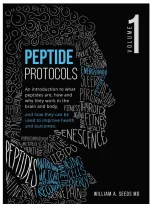
William A. Seeds, MD is a board-certified surgeon practicing medicine for over 30 years. He is Founder and Chairman of the International Peptide Society, Faculty Developer and Lecturer of the A4M Peptide Certification Program, and a leading peptide therapy researcher. He is Chief of Surgery and Orthopedic Residency Site Director for University Hospital, Conneaut, and Medical Director of Orthopedic Rehab and Sports Medicine at the Spire Institute, a USA Olympic training site. Dr. Seeds has been honored at the NFL Hall of Fame for his medical expertise and in treating professional athletes, and serves as Professional Medical Consultant for the NHL, MBL,NBA, and NBC’s Dancing with The Stars.
Home - William Seeds Site
HERE is one of his podcast interviews, many more links on youtube.
HERE is another example from a random user I found:
It’s a matter of mitochondrial genomics and their ability to self replicate (only other self replicating organelle I can think of are peroxisomes in animals).
Remember: The mitochondrial membrane have the proteins responsible for the cell to produce “energy” and “breathe” for the cell — the electron transport system. So a partially denatured and damaged membrane of mitochondria (phospholipid cardiolipin) make it harder for the cell to do its normal function, producing proteins, etc…leading to be harder for tissues and organs to function properly and the body being tired and lack ability to properly function.
Mitochondria are self replicating. If one has mitochondrial breakdown of membranes due to ROS — reactive oxygen species — free radicals…at any point mutations (or others) in the mitochondrial genome is likely to reproduce/self-replicate mitochondria with those same mutations (F1 generation).
Furthermore, like any other genome or organism — remember though it is the mitochondria is an organelle — and, it is subject to both epigenetics and pleiotopy. If the mitochondria are exposed to ROS, these ROS have an effect on gene expression resulting in possible mitochondria expressing genes (phenotypes) that underwent mutation. Pleiotropy — if an affected mitochondria results in mutations prior to self replication, and if gene is pleiotropic (but consider all genes are pleiotropic to some degree) that has expression of that mutation will result in many phenotypic changes that are deleterious in the normal functioning of that mitochondria and hence likely the entire cell.
Therefore, healing properties of SS-31 will have a greater effect on mitochondrial function within cells and (theoretically) other peptides will be more effectual in helping the body.
This an oversimplified description of genetics of mitochondria or the cell itself.
Main point— SS31 or Humarin (HGN) should come before MOTS-C which directly stimulates the present mitochondria (at time of use ) to performing better.
I mentioned peroxisomes notable function is to “neutralize” reactive oxygen species in the cell or detox the cell of free radicals. Also they are involved in metabolism (catabolism) of fatty acids in the cells. Due to the structure of fatty acids— they are hydrogen rich — the hydrogen density exposes them to reactive oxygen species. I am not aware of any peptide that helps peroxisomes function better.






