If this was you, how would you proceed?

Status
Not open for further replies.
hexagonal said:
SGLT2 inhibitors are interesting for a myriad of reasons, including looking to be quite cardio and renal protective even in non-diabetics, but the amount of weight loss they help with is pretty dependent on how carb heavy your diet is, and even on the high side, it's not anywhere near the realm of GLP-1s. I am taking empagliflozin and it did not help with my stall. But the weight loss function is again based in CICO - it increases your CO by reducing the ability for glucose to be reabsorbed in your kidneys so it instead excreted out.
Have you looked into low dose naltrexone?
 
FlowerFairy said:
I use my vibration plates (they really do build muscle and help balance)
They certainly help with balance, but progressive overload resistance training is about the only form of exercise that gains muscle. Other stuff can do it with extremely high volume/repetitions over time (e.g. the muscles you build with physical labor) but vibration plates are not a method for building muscle. There is limited (and honestly, not particularly good) evidence that they improve strength via CNS adaptation.

FlowerFairy said:
I thought about growth hormone but wanted to do more research first. Growth hormone is one of those things that are “steroid adjacent” to me.. gotta be careful.
GH secretagogues run basically all the same health risks of HGH at dosing to reach the same IGF-1 levels. It's perfectly reasonable to be cautious about them, but if you are afraid of touching HGH because of being steroid adjacent, there's not really a reason to be comfortable with the secretagogues. The IGF-1 increase is the risk factor for LVH, tumor growth rates, etc.

Calm Logic said:
Have you looked into low dose naltrexone?
Yes. In general, my goal isn't to just keep throwing more drugs at this until it goes away - polypharma massively complicates things and can increase health risks, especially when stacking combinations that have not been studied or seen observationally in the population at large. I'm already taking quite a few medications, so anything being added needs strong evidence of safety and efficacy. Lots of mixed results (some quite negative) reported on meso and other forums.

LDN looks likely to operate on similar mechanisms as GLP-1s for weight loss - reduction of appetite and food noise, reduction of inflammation. Most of the studies showing efficacy also paired it with bupropion, which I would prefer to actively avoid.
 
FlowerFairy said:
Hmm.. no change in CICO but the scale has started moving downward again.

Go figure. 🥱
There are thousands of factors that can impact your CO even if you are perfectly counting your CI. You're literally taking drugs that manipulate the CO.

Again: This is governed by the laws of reality. Arguing against this is arguing against basic physics, and it's silly. Your body obeys the laws of physics just like everything else. Why you've taken the fact that you are bound to the laws of physics like the rest of us as some sort of impingement on your moral character is beyond me.
 
Calm Logic said:
From r/medicine :

Comment
by
u/chris_m_h from discussion

in
medicine
View: https://www.reddit.com/r/medicine/comments/6rspko/comment/dl9f82d/?utm_source=share&utm_medium=web3x&utm_name=web3xcss&utm_term=1&utm_content=share_button

View: https://www.reddit.com/r/medicine/comments/100zgx4/comment/j2l1dsc/?utm_source=share&utm_medium=web3x&utm_name=web3xcss&utm_term=1&utm_content=share_button

Click to expand...

But anyone who thinks that cico means the co doesn't change is just wrong. That doesn't make cico wrong, it just makes it extremely complicated. The problem is it's an extremely simple way to explain an extremely complex system.

But it is technically correct.

[Imported image pending local asset: attachments-1751351216384-webp.7600]
 
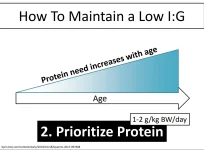
To go back to protein intake, an example of recommended daily protein:

quoted said:
For a body weight of 200 pounds (approximately 90.72 kg), the recommended protein intake based on the guideline of 1-2 g/kg BW/day would be between 90.72 grams and 181.44 grams per day .

So up to 90 grams of protein per 100 pounds of body weight.

These protein amounts are based on a presentationon lowering the insulin to glucagon ratio (IGR), by a professor who studies weight gain:

[Imported image pending local asset: attachments-protein-webp.7601]

According to the presentation (from seven years ago), the older we get, the more we want to be on the higher end of the range for protein intake.

More info on IGR:

Google Gemini said:
If you are trying to lose weight, you generally want the insulin-glucagon ratio to be low .

Here's why:

Insulin is anabolic: Insulin promotes the storage of energy. When insulin levels are high, your body is signaled to store glucose as glycogen in the liver and muscles, and convert excess glucose into fat for long-term storage. This is an "anabolic" state, meaning it favors building up reserves, including fat.

Glucagon is catabolic: Glucagon, on the other hand, is a "catabolic" hormone. It signals the body to release stored energy. When glucagon levels are higher (leading to a low insulin-glucagon ratio), your body is stimulated to break down glycogen (glycogenolysis) and fat (lipolysis) to release glucose and fatty acids into the bloodstream for energy. This is the state where fat burning is favored.

Therefore, a low insulin-glucagon ratio encourages your body to tap into its fat stores for energy, which is desirable for weight loss.

Factors that influence this ratio:

Diet: A diet high in refined carbohydrates and sugars tends to keep insulin levels elevated, leading to a higher insulin-glucagon ratio. A diet lower in carbohydrates and higher in healthy fats and protein can help keep insulin levels lower and shift the ratio towards glucagon's effects.

Fasting: During fasting, insulin levels drop and glucagon levels rise, promoting fat burning.

Exercise: Physical activity can also influence the ratio in a way that supports energy utilization and fat loss.

It's important to note that maintaining a healthy balance is key, and extreme fluctuations are not ideal. The body constantly adjusts this ratio to maintain blood sugar homeostasis. However, for the specific goal of weight loss, strategies that favor a lower insulin-glucagon ratio are generally beneficial.
 
Calm Logic said:
Now that we have the option of over-the-counter continuous glucose monitoring, I think we can learn more about stalls from studying that compared to the black box of CICO.

Even without diabetes, obesity specialists will sometimes add metformin, phentermine, or another medication (that insurance would approve) to help increase the effectiveness of a GLP. Generic Jardiance is available from India for cheap, mostly the cost of shipping.
I was briefly on jardiance + mounjaro when I was initially switching over, and that dried me out hard. I felt like I could not drink enough water no matter what.
 
Calm Logic said:
From r/medicine :

Comment
by
u/chris_m_h from discussion

in
medicine
View: https://www.reddit.com/r/medicine/comments/6rspko/comment/dl9f82d/?utm_source=share&utm_medium=web3x&utm_name=web3xcss&utm_term=1&utm_content=share_button

Click to expand...

This is a lot of words that say absolutely nothing to dispel the facts of CICO. It basically just says that CO isn't a static number and is impacted by a lot of factors, including medication, hormones, etc.

Which, well, yeah, of course. No one here is arguing otherwise.

My experience is that polypharma has diminishing returns and that you can still run into situations where you eat more than your body needs to maintain or lose weight, and the only really viable option is to tweak the CICO levers, as opaque as they can be at times.

Like, fundamentally, if you just stop eating and reduce your CI to 0, you will lose fat (and muscle). Everyone will, without exception. Because your body can't produce something from nothing. Obviously I am not suggesting starving yourself, but it is the purest form of tweaking the CI half of the equation, and it will work 100% of the time. Because your body can't produce new energy stores without energy to store in them. Once you accept that that is true, figuring out the CI needed to support you in the weight loss journey is a step you can take.
 
So CICO is very helpful in the long-term for most people with a BMI over 30. I don't think so.

You seem to be saying -- well, since we have the GLPs -- we can be even more restrictive with intake. But metabolism can also go down. Energy levels can crash. Good luck with all that. Yes, it can help with a stall, but it's not a long-term solution.

To reiterate: CICO is a mechanism of weight loss, but it's not enough on its own for a long-term strategy for most people. CICO partly or mostly explains why we lose weight with GLPs, but that doesn't mean we can just pretend the GLPs aren't the magic in the bottle. Take away the GLP, and what do you have? Wishful, simplistic, short-term thinking about CICO. That's it.

Similarly, with weight loss from a strict vegan diet, you can explain it in terms of CICO. But the magic may be volumetrics or whatever, just as a keto diet may have the magic of satiating protein. And even then, most people won't stick with a vegan or keto diet, or any diet that ultimately restricts calories, week after week, year after year. Unless it doesn't feel restrictive because of GLPs or some hormonal restoration from having lost a lot of weight already.
 
PhoenixPalmer said:
I say check your calories intake. I think there might be something that is getting you over your deficit.
So another vote for self-induced calorie restriction, even though it doesn't work in the long term for the vast majority of people.

And many of us are already fatigued on GLPs, but we should eat even less?

The best advice in this thread has been to be patient and to consider raising the dose of reta, which @FlowerFairy has said she plans to do when it's time to titrate up again.
 
Calm Logic said:
we should eat even less
This highly depends on everything else, but for some people it is the answer. Especially when they have lost a chunk of weight already but haven't recalculated their new requirements. Some people have another medical condition that is hindering their CO that should be addressed. Some people would benefit from trying different macro balances, reta is amazing at glucose control so it blunts a lot of the downsides of moderate to high carb diets that could reap the benefit of higher energy levels without the downsides. Some people just aren't accurately tracking their intake. And some people could add to their CO by tracking step counts and/or adding muscle mass.

Raising the reta dose makes it easier to control that ci side. There is some evidence that reta can raise the CO side of the equation a couple hundred kcal, but this is the maximum effect. And it's not likely to be a linear increase as well. (I.e. you get 80% of the effect at 30% of the max dose) Adding more reta doesn't have a huge impact on that number. Usually when I recommend people increase their reta it is because it helps control the levers that are pushing us to increase CI and allows us to decrease it a little more.
 
Calm Logic said:
So CICO is very helpful in the long-term for most people with a BMI over 30. I don't think so.

You seem to be saying -- well, since we have the GLPs -- we can be even more restrictive with intake. But metabolism can also go down. Energy levels can crash. Good luck with all that. Yes, it can help with a stall, but it's not a long-term solution.

To reiterate: CICO is a mechanism of weight loss, but it's not enough on its own for a long-term strategy for most people. CICO partly or mostly explains why we lose weight with GLPs, but that doesn't mean we can just pretend the GLPs aren't the magic in the bottle. Take away the GLP, and what do you have? Wishful, simplistic, short-term thinking about CICO. That's it.

Similarly, with weight loss from a strict vegan diet, you can explain it in terms of CICO. But the magic may be volumetrics or whatever, just as a keto diet may have the magic of satiating protein. And even then, most people won't stick with a vegan or keto diet, or any diet that ultimately restricts calories, week after week, year after year. Unless it doesn't feel restrictive because of GLPs or some hormonal restoration from having lost a lot of weight already.
That's the problem - as much as we want to praise these drugs, they actually aren't magic in the bottle. They help us with the CI by reducing appetite and CO by increased metabolism (with reta). SGLT2 inhibitors help by preventing us from absorbing some glucose and instead pissing it out, so again, more CO out. (Or perhaps less CI in since some of those carbs don't really "count.") One of the reasons TRT helps people lose weight is because the CO gets boosted by the muscle mass you put on. But all of these CO increasing effects are pretty small - a couple of hundred calories here, a couple hundred calories there. I could wipe out 100% of the medication induced CO with a 44oz coke.

The biggest things these medications do is help us naturally adjust to a healthier CI. We want to eat less, so we eat less, and we lose weight. And that's amazing! As I've said plenty of times, every time I've attempted to lose weight it has been a miserable experience and even when I've dropped significant weight I had never been able to keep it off.

I am not saying everyone should just be counting calories and that's the end of the discussion and there's nothing else involved. But the fact remains that losing weight requires us reduce our caloric intake below our caloric expenditure. And if you're stalled - and I don't mean maintaining weight for a couple of weeks, or going through recomp where your weight is static but your lean body mass to fat mass ratio is improving, but 3-4 weeks of the weight staying the same or going up, you know you need to change the balance of CI vs. CO. That's just the fundamental reality to it.

You have options on how you can change that - maybe going up in dosing is an option for you. Maybe you're comfortable with poly pharmacy. But maybe those aren't options. Lots of people don't feel comfortable ending up on a long list of self-administered prescription medications, or taking doses above the currently approved ones. Maybe RHR is too high to go up again on reta. What options do you have then besides eating less or moving more?
 
Calm Logic said:
So another vote for self-induced calorie restriction, even though it doesn't work in the long term for the vast majority of people.

And many of us are already fatigued on GLPs, but we should eat even less?

The best advice in this thread has been to be patient and to consider raising the dose of reta, which @FlowerFairy has said she plans to do when it's time to titrate up again.
You don't need to freak out and massively change your diet if there's just one or two weeks of stagnation but fundamentally yes, you need fewer calories in. You might need to adjust your macro ratio if energy is a problem, or potentially look at intentional maintenance periods, carb cycling, etc.

But calorie restriction is what the GLP-1s help us do. It's not the same as trying to do it without them. You're going from working with a hammer and chisel to a jackhammer. Things you could never accomplish with the former become doable with the latter.
 
Regarding stalls, it helped me to go to Labcorp. The improved blood results made me feel better, while waiting for the weight to go down again:

Google Gemini said:
CICO, by its nature, provides no insights into how the body is processing energy at a cellular level. Here, markers like HbA1c, fasting insulin, and triglyceride levels offer critical data. A decreasing HbA1c signifies improved long-term blood sugar control, reflecting enhanced insulin sensitivity – a cornerstone of metabolic health often dramatically improved with fat loss. Lower fasting insulin levels directly indicate that the body requires less insulin to manage blood glucose, a testament to reduced insulin resistance. Similarly, significant drops in triglycerides, often a hallmark of improved fat metabolism and reduced liver fat, paint a picture of internal health far beyond what CICO can reveal. Liver enzymes (ALT, AST), when elevated due to fatty liver disease, provide another powerful indicator; their normalization with weight loss underscores the profound internal healing occurring.

ZippityDooDah said:
I've had two extended stalls since starting on tirz back in April of 2023 (April 1st to be precise). One lasted about 4 months, and the second lasted close to 8 months (so combined literally a year - almost half the time I've been taking it). I'm fortunate that I never gained anything back, but one thing I learned was the more you "change things up" trying to break the stall, it seems to often result in the stall setting in even harder and longer.

I'm not sure if anything I just typed helps or just confuses the question lol, but if there's one thing I preach like a TV evangelist it's that the weight loss process requires a superhuman amount of patience at times.

ZippityDooDah said:
View attachment 7560

It's been a looooooong road traveled since starting on Mounjaro way back on April Fool's day 2023, and mentally seems even longer for the last few pounds to break under 200lbs. (For my metric friends that's just shy of 50kg down; don't ask me what it is in stone.) For my fellow math nerds, that's 818 days to lose 107.6lbs, or .1315lbs/day. For trivia buffs, 818 is the area code for the San Fernando valley.

What the graph doesn't accurately show are two long ass stalls because I usually stop weighing myself during those stretches to avoid getting psyched out.

175 is my "goal", but I'm not going to be too upset if I don't get there. I've always been pretty comfortable in the 185-195 range, and even now with a 32" waist I have to go pretty tight with my belt to keep pants from constantly falling down (and the courts are pretty insistent about me keeping my pants on).

This is my 3rd time losing over 100lbs. 1st time almost 30 years ago and the 2nd time about 15 years ago, and both times I kept most of it off for a good number of years until some major life event decided it was time to buy fat kid clothes again.

This journey is going to throw some twists and curves at everyone along the way. While I know from experience that it's easier said than done, don't let it get you down and do your best to stick to it and eventually things will start working in your favor again.
 
Apparently whining about it and increasing glutamine was the ticket. Was programming a new fitness tracker and noticed I’m down 8 lbs this month.

All the talk about calories reminds me of the nutritionist I had to see before Kaiser Permanente would let me see the endocrinologist when I was in my early 20’s. She didn’t teach me anything about nutrition, just told me to eat 1000 calories daily, gave me a basic diet plan, told me to fill out the food diaries and see her every week. So I dutifully did as instructed and lost nothing. I think I was living on slim fast and plain salads. Every week she lectured me about lower calorie substitutions to use in my diet (most of which I wasn’t using and had told her so, but she made it eminently clear that she didn’t believe me. After I had been seeing her for about 8 months, she turned to me and said coolly, “Have you considered not eating ice cream?” I stared at her and could feel the fury building up. I stood up and leaned over her and said, “Bitch, I haven’t had any ice cream since BEFORE I was told I had to see you.. no ice cream. No frozen yogurt. No other sweets. I have documented everything that has gone in my mouth (I was steadily getting louder.. I was furious). I have stuck to your miserable diet. I drink water and unsweetened tea. I’m sick of you. I told my doc I wanted to see an endocrinologist and they said I had to see you first. I’ve seen you. I’m done with your useless “help”, and I.Want.To.See.An.

ENDOCRINOLOGIST! You can take your food diaries and your holier than thou attitude and go straight to hell.” And I walked out. My PCP was standing there.. as were a half dozen other staff. I looked at her and said, “I saw her. She is a horrible person and a lousy nutritionist. She doesn’t believe me and makes no effort to tailor her “advice” to the diet I am eating and have been eating. Can I see an endocrinologist now, PLEASE?” Got an appointment the very next week. Was diagnosed with not only hypothyroidism but male hair growth syndrome. I relaxed the caloric restriction but still stayed under 1300/day. And once on the correct dose of thyroid replacement, I started losing weight. After one appointment the endo was escorting me out to the lobby and noticed the nutritionist in the cubby she saw patients in, and loudly said, “WOW, TREAT THE ISSUE SHE NEEDED AND AMAZINGLY SHE IS LOSING WEIGHT EVEN THO SHE IS EATING MORE- IMAGINE THAT!” I got a feeling he didn’t think much of her either.

Once the hormones were straight I felt better and joined a gym. First time I went the “personal trainer” assigned to me worked me so hard I could barely walk out. I don’t think he expected me to come back. I was so obviously in pain that a coworker gave me one of his prescription pain pills and I took it. I did go back. I went 7 days a week. First hour and 45 minutes was on the stairmaster; you could program in your weight and it told you how many calories you burned during use. I stayed on that long because it meant I started out burning 1500 calories on that machine, then I did the circuit machines. Did it for 6 months. Caught the flu. Was so broken winded I couldn’t do my usual workouts. Had to slow down for about 6 weeks. Then I moved back to Texas. The gyms there weren’t as nice as the one I’d been at. Their stair stepper made my knees hurt. I couldn’t do but 45 minutes. I didn’t have a steady schedule like in Maryland either. I kept at it for a few years but the weight started coming back. I don’t know if it was because I was much younger then, but I haven’t found a stairmaster since that gym in MD that I could tolerate for very long. Then I went back to school and between work and classes I had no time to work out. I did take some weight lifting classes, and I played JV soccer. But I didn’t join another gym. Working out 7 days a week isn’t sustainable anyway. Now that I’m old and have a steady schedule again I may look for another gym, but I’m not sure I will.

At least the stall is broken. For now.

 
FlowerFairy said:
Apparently whining about it and increasing glutamine was the ticket. Was programming a new fitness tracker and noticed I’m down 8 lbs this month.

All the talk about calories reminds me of the nutritionist I had to see before Kaiser Permanente would let me see the endocrinologist when I was in my early 20’s. She didn’t teach me anything about nutrition, just told me to eat 1000 calories daily, gave me a basic diet plan, told me to fill out the food diaries and see her every week. So I dutifully did as instructed and lost nothing. I think I was living on slim fast and plain salads. Every week she lectured me about lower calorie substitutions to use in my diet (most of which I wasn’t using and had told her so, but she made it eminently clear that she didn’t believe me. After I had been seeing her for about 8 months, she turned to me and said coolly, “Have you considered not eating ice cream?” I stared at her and could feel the fury building up. I stood up and leaned over her and said, “Bitch, I haven’t had any ice cream since BEFORE I was told I had to see you.. no ice cream. No frozen yogurt. No other sweets. I have documented everything that has gone in my mouth (I was steadily getting louder.. I was furious). I have stuck to your miserable diet. I drink water and unsweetened tea. I’m sick of you. I told my doc I wanted to see an endocrinologist and they said I had to see you first. I’ve seen you. I’m done with your useless “help”, and I.Want.To.See.An.

ENDOCRINOLOGIST! You can take your food diaries and your holier than thou attitude and go straight to hell.” And I walked out. My PCP was standing there.. as were a half dozen other staff. I looked at her and said, “I saw her. She is a horrible person and a lousy nutritionist. She doesn’t believe me and makes no effort to tailor her “advice” to the diet I am eating and have been eating. Can I see an endocrinologist now, PLEASE?” Got an appointment the very next week. Was diagnosed with not only hypothyroidism but male hair growth syndrome. I relaxed the caloric restriction but still stayed under 1300/day. And once on the correct dose of thyroid replacement, I started losing weight. After one appointment the endo was escorting me out to the lobby and noticed the nutritionist in the cubby she saw patients in, and loudly said, “WOW, TREAT THE ISSUE SHE NEEDED AND AMAZINGLY SHE IS LOSING WEIGHT EVEN THO SHE IS EATING MORE- IMAGINE THAT!” I got a feeling he didn’t think much of her either.

Once the hormones were straight I felt better and joined a gym. First time I went the “personal trainer” assigned to me worked me so hard I could barely walk out. I don’t think he expected me to come back. I was so obviously in pain that a coworker gave me one of his prescription pain pills and I took it. I did go back. I went 7 days a week. First hour and 45 minutes was on the stairmaster; you could program in your weight and it told you how many calories you burned during use. I stayed on that long because it meant I started out burning 1500 calories on that machine, then I did the circuit machines. Did it for 6 months. Caught the flu. Was so broken winded I couldn’t do my usual workouts. Had to slow down for about 6 weeks. Then I moved back to Texas. The gyms there weren’t as nice as the one I’d been at. Their stair stepper made my knees hurt. I couldn’t do but 45 minutes. I didn’t have a steady schedule like in Maryland either. I kept at it for a few years but the weight started coming back. I don’t know if it was because I was much younger then, but I haven’t found a stairmaster since that gym in MD that I could tolerate for very long. Then I went back to school and between work and classes I had no time to work out. I did take some weight lifting classes, and I played JV soccer. But I didn’t join another gym. Working out 7 days a week isn’t sustainable anyway. Now that I’m old and have a steady schedule again I may look for another gym, but I’m not sure I will.

At least the stall is broken. For now.
Yeah, thyroid issues can really throttle the bodies energy output and responds in opposition to reducing calorie intake. Reducing calories further causes the reverse t3 to skyrocket and cause the body to further reduce it's energy usage. It's a loop that makes any semblance of healthy weight loss impossible.

Sometimes eating more to move the t4-t3 conversion instead of rt3 increases the bodies energy output more than the increase in input. Thyroids are extremely complicated.
 
pavlovs said:
You realize that you are one of those people willing to risk your own overall health to drop numbers on a scale, right? You are taking multiple meds that haven't even been approved by the FDA, haven't even passed human trials yet, and are made and sourced by Chinese smugglers. Do you know what site you are on? Pot needs to quit calling the kettle black here, chickiepoo.
FDA approval doesn't mean shit tho
 
imtiredofbeingfat said:
FDA approval doesn't mean shit tho
This is laughably untrue. But it doesn't mean that something that doesn't have it is inherently unsafe.
 
Status
Not open for further replies.

Trending content

Members online

No members online now.

Forum statistics

Threads
2,620
Messages
55,146
Members
1
Latest member
Admin
Back
Top