Global crackdown 15.5 million in seizures May 7 2026

Status
Not open for further replies.

LabRatBarbie

GLP-1 Apprentice
Member Since
Mar 11, 2026
Posts
89
Likes Received
215
Location
Pensacola FL
Edit: I came across this article and wanted to share it. 🤫☺️🙄

SINGAPORE – An INTERPOL-coordinated operation across 90 countries and territories has resulted in the seizure of 6.42 million doses of unapproved and counterfeit pharmaceuticals worth USD 15.5 million.

Operation Pangea XVIII (10 - 23 March 2026), led to 269 arrests and the dismantling of 66 criminal groups involved in the illicit pharmaceutical trade.

Law enforcement agencies worldwide launched 392 investigations and executed 158 search warrants targeting criminal networks distributing unapproved, counterfeit, substandard and falsified medical products.

Among the most seized products were erectile dysfunction medications, sedatives, analgesics, antibiotics and anti-smoking products.

In addition, digital enforcement operations disrupted approximately 5,700 criminal-linked websites, social media pages, channels and automated bots used to market and sell illicit medicines.

INTERPOL Secretary General Valdecy Urquiza said:

“Fake medicines are not just a fraud - they put lives at risk. Through online marketplaces and informal supply chains, criminals can exploit gaps in oversight, targeting people looking for fast or affordable treatment. The consequences can be severe, or even fatal.

“For law enforcement, protecting the public means disrupting the networks behind these products by strengthening cooperation across borders. Nearly 20 years after the first Pangea operation was launched, it continues to deliver real results.”

200-99c7e3763da1.gif

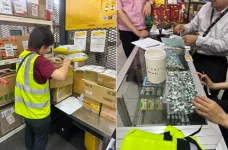
Over five tonnes of raw materials were intercepted at a warehouse at Chittagong Port, Bangladesh. The consignment contained antibiotics and anti-inflammatory agents stored in large drums falsely labelled as dicalcium phosphate, a common tableting ingredient.

Antiparasitics making a comeback​[archived internal link]
There was a sharp rise in the seizure of antiparasitic medicines - a trend last seen in previous editions of Operation Pangea during the COVID-19 pandemic.

This increase is being driven by growing online promotion of these products as alternative cancer treatments, despite repeated warnings from health authorities that such claims are not supported by scientific evidence.

Two substances dominated the seizures: ivermectin, used to treat parasite and worm infections, and fenbendazole, a deworming agent approved only for veterinary use.

Often mislabelled as health supplements, these products are being sold as part of so-called “cancer treatment kits”, making them easier to access and avoid regulation.

Australia, New Zealand, Singapore, the United States and the United Kingdom all reported significant seizures of both substances.

Quick fix promises threatening health​[archived internal link]
Demand for pharmaceuticals linked to performance and lifestyle continues to grow, with anabolic steroids once again the dominant category with 86,732 doses seized globally.

Demand is largely driven by the bodybuilding and fitness communities, with production detected in parts of Eastern and South-Eastern Europe and established manufacturing hubs in India, the United Kingdom and the United States.

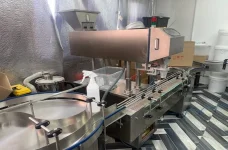
In Bulgaria, authorities dismantled a clandestine production facility and seized millions of mislabelled pills, ampoules and injectables.

Biser Vuchkov, Director of International Cooperation Directorate at Bulgaria’s Ministry of Interior said:

“Through its continued involvement in INTERPOL’s Operation Pangea, Bulgaria demonstrates unwavering resolve against illicit pharmaceuticals, dismantling criminal networks and protecting public health.

“The latest results highlight the power of coordinated action in disrupting illegal production, trafficking, and online distribution worldwide.”

Authorities across the globe also identified growing demand for peptides - synthetic substances promoted online for muscle growth, fat loss and recovery.

Originally used in research settings, these products are now widely sold as “research chemicals” or “cosmetic peptides” to avoid detection, despite having no approved dosage or safety standards for human use.

Significant seizures were reported in Australia, Ireland and New Zealand, with hundreds of peptide vials were intercepted in multiple enforcement actions.

Meanwhile, high demand for GLP-1 medicines, originally developed to treat diabetes but now widely used for weight loss, has opened up new opportunities for criminal networks.

Illicit versions are often manufactured in Asia and sold online for as low as USD 10. In some cases, they have been found to contain sibutramine, a substance banned in many countries due to links to heart attacks and strokes.

Criminals targeting essential medicines across Africa​[archived internal link]
The participation of 12 African countries in this year’s operation revealed a clearer picture of the flow of illicit pharmaceuticals across the region.

Unlike other regions, seizures in Africa mainly comprised essential medicines such as painkillers, antibiotics and antimalarials.

Criminal groups often sell these illicit medicines through informal markets to meet treatment demand, particularly in areas where access to affordable healthcare is limited.

Many of these illicit medicines were found to be substandard, falsified, expired, improperly stored or missing key safety information.

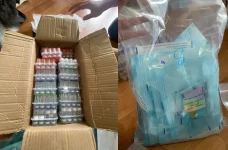
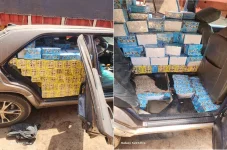
Enforcement actions reflect the scale of the problem. In Burkina Faso, authorities intercepted 384,000 antibiotic capsules. In Côte d’Ivoire, one tonne of counterfeit ibuprofen was seized from a single vehicle, and in Cameroon, thousands of bottles of suspected counterfeit antimalarials and antibiotics were intercepted.

attachments-1778866841120-webp.23379.webp

attachments-1778866868367-webp.23380.webp

attachments-1778866884842-webp.23381.webp

attachments-1778866900046-webp.23382.webp
 

Attachments

  • 200-99c7e3763da1.gif
    200-99c7e3763da1.gif
    56.9 KB · Views: 0
  • attachments-1778866841120-webp.23379.webp
    attachments-1778866841120-webp.23379.webp
    160.3 KB · Views: 0
  • attachments-1778866868367-webp.23380.webp
    attachments-1778866868367-webp.23380.webp
    107 KB · Views: 0
  • attachments-1778866884842-webp.23381.webp
    attachments-1778866884842-webp.23381.webp
    115.5 KB · Views: 0
  • attachments-1778866900046-webp.23382.webp
    attachments-1778866900046-webp.23382.webp
    77.4 KB · Views: 0
The peptide crackdown is coming. Pharma wants the GLPs gone. They gave the compounders the rest of the peps to compensate them for losing the GLPs so the compounders are going to want the rest gone. The whole China peptide thing is in full view of the public with the media reporting on it daily so the government is going want to look like they are responding. All the forces are aligning for a crackdown.

Is it going to go away? Of course not. Are things going to be harder to find and take longer to get? Yep. Will it likely get more expensive as more products get seized and profit margins go down? Also, Yep.

When was the best time to build your stash? Yesterday. When is the second best time? Today.
 
I don't know man, I feel like peptides are such a different beast than these "...erectile dysfunction medications, sedatives, analgesics, antibiotics and anti-smoking products." The entire article is pretty far fetched. Having experience in the space, their claims about peptides causing various health issues is also baseless (for the most part).

It does feel like they are fearmongering in the hopes that people will stop considering using these so they continue with sending their hard earned money to big pharma.
 
LabRatBarbie said:
SINGAPORE – An INTERPOL-coordinated operation across 90 countries and territories has resulted in the seizure of 6.42 million doses of unapproved and counterfeit pharmaceuticals worth USD 15.5 million.

Operation Pangea XVIII (10 - 23 March 2026), led to 269 arrests and the dismantling of 66 criminal groups involved in the illicit pharmaceutical trade.

Law enforcement agencies worldwide launched 392 investigations and executed 158 search warrants targeting criminal networks distributing unapproved, counterfeit, substandard and falsified medical products.

Among the most seized products were erectile dysfunction medications, sedatives, analgesics, antibiotics and anti-smoking products.

In addition, digital enforcement operations disrupted approximately 5,700 criminal-linked websites, social media pages, channels and automated bots used to market and sell illicit medicines.

INTERPOL Secretary General Valdecy Urquiza said:

“Fake medicines are not just a fraud - they put lives at risk. Through online marketplaces and informal supply chains, criminals can exploit gaps in oversight, targeting people looking for fast or affordable treatment. The consequences can be severe, or even fatal.

“For law enforcement, protecting the public means disrupting the networks behind these products by strengthening cooperation across borders. Nearly 20 years after the first Pangea operation was launched, it continues to deliver real results.”

Over five tonnes of raw materials were intercepted at a warehouse at Chittagong Port, Bangladesh. The consignment contained antibiotics and anti-inflammatory agents stored in large drums falsely labelled as dicalcium phosphate, a common tableting ingredient.

Antiparasitics making a comeback​
There was a sharp rise in the seizure of antiparasitic medicines - a trend last seen in previous editions of Operation Pangea during the COVID-19 pandemic.

This increase is being driven by growing online promotion of these products as alternative cancer treatments, despite repeated warnings from health authorities that such claims are not supported by scientific evidence.

Two substances dominated the seizures: ivermectin, used to treat parasite and worm infections, and fenbendazole, a deworming agent approved only for veterinary use.

Often mislabelled as health supplements, these products are being sold as part of so-called “cancer treatment kits”, making them easier to access and avoid regulation.

Australia, New Zealand, Singapore, the United States and the United Kingdom all reported significant seizures of both substances.

Quick fix promises threatening health​
Demand for pharmaceuticals linked to performance and lifestyle continues to grow, with anabolic steroids once again the dominant category with 86,732 doses seized globally.

Demand is largely driven by the bodybuilding and fitness communities, with production detected in parts of Eastern and South-Eastern Europe and established manufacturing hubs in India, the United Kingdom and the United States.

In Bulgaria, authorities dismantled a clandestine production facility and seized millions of mislabelled pills, ampoules and injectables.

Biser Vuchkov, Director of International Cooperation Directorate at Bulgaria’s Ministry of Interior said:

“Through its continued involvement in INTERPOL’s Operation Pangea, Bulgaria demonstrates unwavering resolve against illicit pharmaceuticals, dismantling criminal networks and protecting public health.

“The latest results highlight the power of coordinated action in disrupting illegal production, trafficking, and online distribution worldwide.”

Authorities across the globe also identified growing demand for peptides - synthetic substances promoted online for muscle growth, fat loss and recovery.

Originally used in research settings, these products are now widely sold as “research chemicals” or “cosmetic peptides” to avoid detection, despite having no approved dosage or safety standards for human use.

Significant seizures were reported in Australia, Ireland and New Zealand, with hundreds of peptide vials were intercepted in multiple enforcement actions.

Meanwhile, high demand for GLP-1 medicines, originally developed to treat diabetes but now widely used for weight loss, has opened up new opportunities for criminal networks.

Illicit versions are often manufactured in Asia and sold online for as low as USD 10. In some cases, they have been found to contain sibutramine, a substance banned in many countries due to links to heart attacks and strokes.

Criminals targeting essential medicines across Africa​
The participation of 12 African countries in this year’s operation revealed a clearer picture of the flow of illicit pharmaceuticals across the region.

Unlike other regions, seizures in Africa mainly comprised essential medicines such as painkillers, antibiotics and antimalarials.

Criminal groups often sell these illicit medicines through informal markets to meet treatment demand, particularly in areas where access to affordable healthcare is limited.

Many of these illicit medicines were found to be substandard, falsified, expired, improperly stored or missing key safety information.

Enforcement actions reflect the scale of the problem. In Burkina Faso, authorities intercepted 384,000 antibiotic capsules. In Côte d’Ivoire, one tonne of counterfeit ibuprofen was seized from a single vehicle, and in Cameroon, thousands of bottles of suspected counterfeit antimalarials and antibiotics were intercepted.

View attachment 23379 View attachment 23380 View attachment 23381 View attachment 23382

I don’t know who’s more corrupt? The government’s or the online dealers. Can’t we all just get along.

Bill
 
LabRatBarbie said:
SINGAPORE – An INTERPOL-coordinated operation across 90 countries and territories has resulted in the seizure of 6.42 million doses of unapproved and counterfeit pharmaceuticals worth USD 15.5 million.

Operation Pangea XVIII (10 - 23 March 2026), led to 269 arrests and the dismantling of 66 criminal groups involved in the illicit pharmaceutical trade.

Law enforcement agencies worldwide launched 392 investigations and executed 158 search warrants targeting criminal networks distributing unapproved, counterfeit, substandard and falsified medical products.

Among the most seized products were erectile dysfunction medications, sedatives, analgesics, antibiotics and anti-smoking products.

In addition, digital enforcement operations disrupted approximately 5,700 criminal-linked websites, social media pages, channels and automated bots used to market and sell illicit medicines.

INTERPOL Secretary General Valdecy Urquiza said:

“Fake medicines are not just a fraud - they put lives at risk. Through online marketplaces and informal supply chains, criminals can exploit gaps in oversight, targeting people looking for fast or affordable treatment. The consequences can be severe, or even fatal.

“For law enforcement, protecting the public means disrupting the networks behind these products by strengthening cooperation across borders. Nearly 20 years after the first Pangea operation was launched, it continues to deliver real results.”

Over five tonnes of raw materials were intercepted at a warehouse at Chittagong Port, Bangladesh. The consignment contained antibiotics and anti-inflammatory agents stored in large drums falsely labelled as dicalcium phosphate, a common tableting ingredient.

Antiparasitics making a comeback​
There was a sharp rise in the seizure of antiparasitic medicines - a trend last seen in previous editions of Operation Pangea during the COVID-19 pandemic.

This increase is being driven by growing online promotion of these products as alternative cancer treatments, despite repeated warnings from health authorities that such claims are not supported by scientific evidence.

Two substances dominated the seizures: ivermectin, used to treat parasite and worm infections, and fenbendazole, a deworming agent approved only for veterinary use.

Often mislabelled as health supplements, these products are being sold as part of so-called “cancer treatment kits”, making them easier to access and avoid regulation.

Australia, New Zealand, Singapore, the United States and the United Kingdom all reported significant seizures of both substances.

Quick fix promises threatening health​
Demand for pharmaceuticals linked to performance and lifestyle continues to grow, with anabolic steroids once again the dominant category with 86,732 doses seized globally.

Demand is largely driven by the bodybuilding and fitness communities, with production detected in parts of Eastern and South-Eastern Europe and established manufacturing hubs in India, the United Kingdom and the United States.

In Bulgaria, authorities dismantled a clandestine production facility and seized millions of mislabelled pills, ampoules and injectables.

Biser Vuchkov, Director of International Cooperation Directorate at Bulgaria’s Ministry of Interior said:

“Through its continued involvement in INTERPOL’s Operation Pangea, Bulgaria demonstrates unwavering resolve against illicit pharmaceuticals, dismantling criminal networks and protecting public health.

“The latest results highlight the power of coordinated action in disrupting illegal production, trafficking, and online distribution worldwide.”

Authorities across the globe also identified growing demand for peptides - synthetic substances promoted online for muscle growth, fat loss and recovery.

Originally used in research settings, these products are now widely sold as “research chemicals” or “cosmetic peptides” to avoid detection, despite having no approved dosage or safety standards for human use.

Significant seizures were reported in Australia, Ireland and New Zealand, with hundreds of peptide vials were intercepted in multiple enforcement actions.

Meanwhile, high demand for GLP-1 medicines, originally developed to treat diabetes but now widely used for weight loss, has opened up new opportunities for criminal networks.

Illicit versions are often manufactured in Asia and sold online for as low as USD 10. In some cases, they have been found to contain sibutramine, a substance banned in many countries due to links to heart attacks and strokes.

Criminals targeting essential medicines across Africa​
The participation of 12 African countries in this year’s operation revealed a clearer picture of the flow of illicit pharmaceuticals across the region.

Unlike other regions, seizures in Africa mainly comprised essential medicines such as painkillers, antibiotics and antimalarials.

Criminal groups often sell these illicit medicines through informal markets to meet treatment demand, particularly in areas where access to affordable healthcare is limited.

Many of these illicit medicines were found to be substandard, falsified, expired, improperly stored or missing key safety information.

Enforcement actions reflect the scale of the problem. In Burkina Faso, authorities intercepted 384,000 antibiotic capsules. In Côte d’Ivoire, one tonne of counterfeit ibuprofen was seized from a single vehicle, and in Cameroon, thousands of bottles of suspected counterfeit antimalarials and antibiotics were intercepted.

View attachment 23379 View attachment 23380 View attachment 23381 View attachment 23382

200-99c7e3763da1.gif
 

Attachments

  • 200-99c7e3763da1.gif
    200-99c7e3763da1.gif
    56.9 KB · Views: 0
5byfive said:
The peptide crackdown is coming. Pharma wants the GLPs gone. They gave the compounders the rest of the peps to compensate them for losing the GLPs so the compounders are going to want the rest gone. The whole China peptide thing is in full view of the public with the media reporting on it daily so the government is going want to look like they are responding. All the forces are aligning for a crackdown.

Is it going to go away? Of course not. Are things going to be harder to find and take longer to get? Yep. Will it likely get more expensive as more products get seized and profit margins go down? Also, Yep.

When was the best time to build your stash? Yesterday. When is the second best time? Today.
I agree Pharma wants the gray market to go away, HOWEVER, I don't see the gray market as a competitor of Pharma ... at least in the U.S., because we need a prescription to get it. So it's not a 1:1, "take away my gray market UGL and I pivot to Pharma."

Rolex and other super high end luxury brands claim counterfeits hurt their bottom line. Let me tell you, when I see (what I think is) a Rolex, I immediately look at that guy's shoes and know if that watch is real LOL! There's no way in hell that cheap shoe'd guy's counterfeit watch purchase deprived Rolex of revenue.
 
JimGainz said:
I agree Pharma wants the gray market to go away, HOWEVER, I don't see the gray market as a competitor of Pharma ... at least in the U.S., because we need a prescription to get it. So it's not a 1:1, "take away my gray market UGL and I pivot to Pharma."

Rolex and other super high end luxury brands claim counterfeits hurt their bottom line. Let me tell you, when I see (what I think is) a Rolex, I immediately look at that guy's shoes and know if that watch is real LOL! There's no way in hell that cheap shoe'd guy's counterfeit watch purchase deprived Rolex of revenue.
YUP this is the same thing the RIAA and MPAA were saying when piracy took off, as if my broke ass was going to go out to the movies instead of torrenting at a mcdonalds with my prepaid android. I never had the money to buy a CD or DVD collection, or anywhere to keep them.

I have a real job now, and guess what - I pay for Spotify premium and Prime and I don't pirate music and movies.

If I had the money and a willing doctor, I would likely get prescriptions for reta and hgh and clen. BUT I CAN'T. My piracy of these drugs isn't cutting into anyone's profit, because they couldn't/wouldn't accept my money anyway. The drug companies and the FDA know this, they know how stupid this argument is, they know what they're doing.

To be fair, I can kind of understand Eli Lily getting nervous about the first person to OD on reta and croak. Like, it's a matter of time given how many idiots are out there.
 
mybodyisasewer said:
YUP this is the same thing the RIAA and MPAA were saying when piracy took off, as if my broke ass was going to go out to the movies instead of torrenting at a mcdonalds with my prepaid android. I never had the money to buy a CD or DVD collection, or anywhere to keep them.

I have a real job now, and guess what - I pay for Spotify premium and Prime and I don't pirate music and movies.

If I had the money and a willing doctor, I would likely get prescriptions for reta and hgh and clen. BUT I CAN'T. My piracy of these drugs isn't cutting into anyone's profit, because they couldn't/wouldn't accept my money anyway. The drug companies and the FDA know this, they know how stupid this argument is, they know what they're doing.

To be fair, I can kind of understand Eli Lily getting nervous about the first person to OD on reta and croak. Like, it's a matter of time given how many idiots are out there.
Amen! The cherry on top of this unaffordability ... and sometimes inaccessibility ... fiasco is the damned auto pen (no not former POTUS). I get it, many people need it but that contraption is what I firmly believe puts GLP-1s out of financial reach, Rant Over
 
5byfive said:
The peptide crackdown is coming. Pharma wants the GLPs gone. They gave the compounders the rest of the peps to compensate them for losing the GLPs so the compounders are going to want the rest gone. The whole China peptide thing is in full view of the public with the media reporting on it daily so the government is going want to look like they are responding. All the forces are aligning for a crackdown.

Is it going to go away? Of course not. Are things going to be harder to find and take longer to get? Yep. Will it likely get more expensive as more products get seized and profit margins go down? Also, Yep.

When was the best time to build your stash? Yesterday. When is the second best time? Today.
I agree, and I mentioned it a while back. Lilly is huge, and I would bet they have some pull with our government. I'll have 232 vials of Reta when the GB and today's order show.
 
Real counterfeit medications are actually a serious problem, where the drug is not in the product and either something cheap or nothing is. And this kills quite a lot of people. Especially in medicines in poorer countries. The illicit medicine manufacturing system is not just a robin hood thing where people get to access expensive drugs cheaply, it also produces sugar pills labelled as life saving medicines.

A lot is counterfeit in the sense that they are pirating intellectual property, but the drugs are actually there. Quality control may not be fantastic. This is the more common problem, that we all rely on to get pirated GLP drugs. But a kid in Africa with malaria who gets a sugar pill instead of an antimalarial antibiotic could die.
 
“In some cases, they have been found to contain sibutramine, a substance banned in many countries due to links to heart attacks and strokes.”

Please someone tell me this is not something I need to worry about.
 
Tirzmonkey said:
“In some cases, they have been found to contain sibutramine, a substance banned in many countries due to links to heart attacks and strokes.”

Please someone tell me this is not something I need to worry about.
It is not something you need to worry about. There were reports of heart valve damage from this class of serotonin reuptake inhibitor drug and sibutramine, but it was very rare. The odds of getting it in a weight loss supplement are very low but not zero. Getting it in a lyophillised peptide from china would be extremely unlikely. So extremely unlikely times very rare means almost zero probability.
 
LabRatBarbie said:
Edit: I came across this article and wanted to share it. 🤫☺️🙄

SINGAPORE – An INTERPOL-coordinated operation across 90 countries and territories has resulted in the seizure of 6.42 million doses of unapproved and counterfeit pharmaceuticals worth USD 15.5 million.

Operation Pangea XVIII (10 - 23 March 2026), led to 269 arrests and the dismantling of 66 criminal groups involved in the illicit pharmaceutical trade.

Law enforcement agencies worldwide launched 392 investigations and executed 158 search warrants targeting criminal networks distributing unapproved, counterfeit, substandard and falsified medical products.

Among the most seized products were erectile dysfunction medications, sedatives, analgesics, antibiotics and anti-smoking products.

In addition, digital enforcement operations disrupted approximately 5,700 criminal-linked websites, social media pages, channels and automated bots used to market and sell illicit medicines.

INTERPOL Secretary General Valdecy Urquiza said:

“Fake medicines are not just a fraud - they put lives at risk. Through online marketplaces and informal supply chains, criminals can exploit gaps in oversight, targeting people looking for fast or affordable treatment. The consequences can be severe, or even fatal.

“For law enforcement, protecting the public means disrupting the networks behind these products by strengthening cooperation across borders. Nearly 20 years after the first Pangea operation was launched, it continues to deliver real results.”

Over five tonnes of raw materials were intercepted at a warehouse at Chittagong Port, Bangladesh. The consignment contained antibiotics and anti-inflammatory agents stored in large drums falsely labelled as dicalcium phosphate, a common tableting ingredient.

Antiparasitics making a comeback​
There was a sharp rise in the seizure of antiparasitic medicines - a trend last seen in previous editions of Operation Pangea during the COVID-19 pandemic.

This increase is being driven by growing online promotion of these products as alternative cancer treatments, despite repeated warnings from health authorities that such claims are not supported by scientific evidence.

Two substances dominated the seizures: ivermectin, used to treat parasite and worm infections, and fenbendazole, a deworming agent approved only for veterinary use.

Often mislabelled as health supplements, these products are being sold as part of so-called “cancer treatment kits”, making them easier to access and avoid regulation.

Australia, New Zealand, Singapore, the United States and the United Kingdom all reported significant seizures of both substances.

Quick fix promises threatening health​
Demand for pharmaceuticals linked to performance and lifestyle continues to grow, with anabolic steroids once again the dominant category with 86,732 doses seized globally.

Demand is largely driven by the bodybuilding and fitness communities, with production detected in parts of Eastern and South-Eastern Europe and established manufacturing hubs in India, the United Kingdom and the United States.

In Bulgaria, authorities dismantled a clandestine production facility and seized millions of mislabelled pills, ampoules and injectables.

Biser Vuchkov, Director of International Cooperation Directorate at Bulgaria’s Ministry of Interior said:

“Through its continued involvement in INTERPOL’s Operation Pangea, Bulgaria demonstrates unwavering resolve against illicit pharmaceuticals, dismantling criminal networks and protecting public health.

“The latest results highlight the power of coordinated action in disrupting illegal production, trafficking, and online distribution worldwide.”

Authorities across the globe also identified growing demand for peptides - synthetic substances promoted online for muscle growth, fat loss and recovery.

Originally used in research settings, these products are now widely sold as “research chemicals” or “cosmetic peptides” to avoid detection, despite having no approved dosage or safety standards for human use.

Significant seizures were reported in Australia, Ireland and New Zealand, with hundreds of peptide vials were intercepted in multiple enforcement actions.

Meanwhile, high demand for GLP-1 medicines, originally developed to treat diabetes but now widely used for weight loss, has opened up new opportunities for criminal networks.

Illicit versions are often manufactured in Asia and sold online for as low as USD 10. In some cases, they have been found to contain sibutramine, a substance banned in many countries due to links to heart attacks and strokes.

Criminals targeting essential medicines across Africa​
The participation of 12 African countries in this year’s operation revealed a clearer picture of the flow of illicit pharmaceuticals across the region.

Unlike other regions, seizures in Africa mainly comprised essential medicines such as painkillers, antibiotics and antimalarials.

Criminal groups often sell these illicit medicines through informal markets to meet treatment demand, particularly in areas where access to affordable healthcare is limited.

Many of these illicit medicines were found to be substandard, falsified, expired, improperly stored or missing key safety information.

Enforcement actions reflect the scale of the problem. In Burkina Faso, authorities intercepted 384,000 antibiotic capsules. In Côte d’Ivoire, one tonne of counterfeit ibuprofen was seized from a single vehicle, and in Cameroon, thousands of bottles of suspected counterfeit antimalarials and antibiotics were intercepted.
View attachment 23379 View attachment 23380 View attachment 23381 View attachment 23382
I guess thanks for the read???

Operation Pangea is an annual thing INTERPOL has been running for nearly 20 years. Every year they hit counterfeit ED pills, fake antibiotics, sedatives, painkillers, etc. the classic high-volume online scams that actually kill people when the fakes have zero active ingredient or toxic fillers.

This latest one (March 2026) seized 6.4 million doses worth $15.5M and took down thousands of shady websites/bots. Standard Pangea stuff.

Why it doesn’t directly hit most gray GLP-1 buyers ...

These operations focus on finished pharmaceutical products sold to the general public as “brand name” meds (Viagra knockoffs, fake Ozempic pens, etc.).

Most of us source from research chemical / peptide suppliers, not random online pharmacies pretending to sell real Wegovy or Mounjaro. The GLP-1 gray market is mostly raw powder, vials, or compounded product for “research use,” which is a different channel.

Law enforcement priority is on clear counterfeits that endanger the public , not the research peptide scene

(at least not through these big international sweeps).
 
Status
Not open for further replies.

Trending content

Members online

No members online now.

Forum statistics

Threads
2,419
Messages
51,228
Members
1
Latest member
Admin
Back
Top