
You are using an out of date browser. It may not display this or other websites correctly.
You should upgrade or use an alternative browser.
You should upgrade or use an alternative browser.
First Reta Phase III Results
- Thread starter m100568
- Start date
- Status
- Not open for further replies.

dndgeek
GLP-1 Apprentice
Thanks for sharing!

IshimaruKenta
GLP-1 Enthusiast

Interesting that they chose 9mg instead of 8. Good to know.

miss-sanne
GLP-1 Enthusiast

It's even better than weight loss surgery, thanks for this.

less sides on all of these medicines and unless you are very unlucky you can reverse most of them unlike with weight loss surgery.miss-sanne said:It's even better than weight loss surgery, thanks for this.

Tron Carter
GLP-1 Apprentice
Thanks for putting this out!

keangkong
GLP-1 Specialist
- Member Since
- Sep 3, 2024
- Posts
- 1,975
- Likes Received
- 5,478
Here is the link: Eli Lilly (Dec. 11, 2025). Lilly's triple agonist, retatrutide, delivered weight loss of up to an average of 71.2 lbs along with substantial relief from osteoarthritis pain in first successful Phase 3 trial. PR Newswire, https://www.prnewswire.com/news-rel...first-successful-phase-3-trial-302638804.html.
We'll have to wait until they present their results at a medical conference or through a scholarly article before we learn additional details.
Although I'll jump on the bandwagon and praise retatrutide as being the next huge weight loss drug to enter the market, I suspect that large numbers of new weight loss drugs get approved in the next five years.
We'll have to wait until they present their results at a medical conference or through a scholarly article before we learn additional details.
Although I'll jump on the bandwagon and praise retatrutide as being the next huge weight loss drug to enter the market, I suspect that large numbers of new weight loss drugs get approved in the next five years.
keangkong
GLP-1 Specialist
- Member Since
- Sep 3, 2024
- Posts
- 1,975
- Likes Received
- 5,478
miss-sanne said:It's even better than weight loss surgery, thanks for this.
There will be less need for weight loss surgery. Some folks will likely still require retatrutide to lose weight before the surgery and will have to resume taking reta at some point after the surgery.
It's good that weight loss surgery will be less necessary. I have read about and watched televisions about folks who have undergone weight loss surgery. Despite there being some side effects from GLP-1 and GLP-1+ medications, their side effects are usually nowhere close to being as severe as those from weight loss surgery.
keangkong
GLP-1 Specialist
- Member Since
- Sep 3, 2024
- Posts
- 1,975
- Likes Received
- 5,478
Thanks for posting the results. Here is an article commenting on the results: First Retatrutide phase 3 data, a Triumph of Science! https://the-incretins.beehiiv.com/p/first-retatrutide-phase-3-data-a-triumph-of-science. The author points out some good and bad things that I hadn't noticed. For instance, many people had to drop out of the study because they lost too much weight! And the author points out some fairly significant side effects.

desinr-gal
GLP-1 Specialist
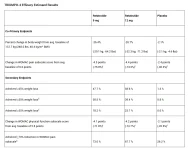
Thank you! What shocks me is that 1.3% on Placebo lost greater than 25%!!! (4.8% of placebo takers quit due to adverse events i.e.side effects!)

What was the timeline of the study? I'm not seeing it..
Found it on website; 68 wks.
What was the timeline of the study? I'm not seeing it..
Found it on website; 68 wks.

Chucky
GLP-1 Apprentice

Funny, I just came off a sub reddit where people were talking about this. Well, started off with this and then turned into an argument about "roid heads". I swear sometimes reddit is an ADHD support group.

keangkong said:It's good that weight loss surgery will be less necessary. I have read about and watched televisions about folks who have undergone weight loss surgery. Despite there being some side effects from GLP-1 and GLP-1+ medications, their side effects are usually nowhere close to being as severe as those from weight loss surgery.
These medications (and those in the pipeline) are definitely making surgery less and less necessary. I had gastric bypass in 2003 and the side-effects weren't too bad. The main side effect was losing 225 pounds
 .
.Hopefully, bariatric surgeons are using these medications as an adjunctive to surgery in the super-morbidly obese. For regularly obese people, I would never recommend gastric surgery. If these medications were available in 2003, I would have never had surgery.

Clevergirl
Recently Joined 🚫No Source Discussion🚫
I have the dysesthesia side effect but the benefits outweigh that tremendously.keangkong said:Thanks for posting the results. Here is an article commenting on the results: First Retatrutide phase 3 data, a Triumph of Science! https://the-incretins.beehiiv.com/p/first-retatrutide-phase-3-data-a-triumph-of-science . The author points out some good and bad things that I hadn't noticed. For instance, many people had to drop out of the study because they lost too much weight! And the author points out some fairly significant side effects.
Chucky
GLP-1 Apprentice
Grogu said:These medications (and those in the pipeline) are definitely making surgery less and less necessary. I had gastric bypass in 2003 and the side-effects weren't too bad. The main side effect was losing 225 pounds
Hopefully, bariatric surgeons are using these medications as an adjunctive to surgery in the super-morbidly obese. For regularly obese people, I would never recommend gastric surgery. If these medications were available in 2003, I would have never had surgery.
Add to that, a large majority of people put the weight back on and some, more than what was lost. At least with reta, if used correctly, people will get a chance to work on their diet as opposed to being forced to eat less through a bypass or sleeve.
Chucky said:Add to that, a large majority of people put the weight back on and some, more than what was lost. At least with reta, if used correctly, people will get a chance to work on their diet as opposed to being forced to eat less through a bypass or sleeve.
Thankfully, I “only” gained back about 100lbs from my lowest and didn’t gain back all 225 or more, but some people do gain it all back.
Tirzepatide has been life altering for me and can’t wait to try reta.
keangkong
GLP-1 Specialist
- Member Since
- Sep 3, 2024
- Posts
- 1,975
- Likes Received
- 5,478
It sounds like your bariatric surgery result was reasonably good. You didn't have bad side effects and you lost a large amount of weight, although you likely still wanted to lose a great deal more.
keangkong said:It sounds like your bariatric surgery result was reasonably good. You didn't have bad side effects and you lost a large amount of weight, although you likely still wanted to lose a great deal more.
I actually lost ~55% of my starting weight after surgery and was very near goal (maybe 10 lbs). So, I did way better than most people do with surgery. But I was relatively young back then and I’m really good a losing weight, just not good at keeping it off
.Thank you for sharing the links to the press release and also website that reviewed the findings. I love clinical research and can’t wait to see additional reta studies. Just looking at the phase II in the NEJM, interesting stuff. Thanks again!

Since the subject of gastric bypass came up, I thought it might be worth mentioning this:
GLP-1RA and gastric bypass surgery surprisingly work in the exact opposite way to trigger weight loss!
With gastric bypass, there's certainly a strong nudge towards changing habits (via a smaller stomach, band, etc.), but the larger effect is believed to be accomplished by severing the vagus nerve from your stomach (which happens as part of the surgery). With that nerve severed, your stomach is no longer able to directly signal to your brain that you just ate via the GLP-1 pathway. Bariatric surgeons believe that prior to surgery your brain had kind of went haywire in trying to manage satiety based on GLP-1 (and related) signaling so by severing that connection, they're shutting down that "faulty" signal and it sounds like a reasonable story to me.
With GLP-1RA, instead of dropping the signal to zero, you're now maxing it out.
GLP-1RA and gastric bypass surgery surprisingly work in the exact opposite way to trigger weight loss!
With gastric bypass, there's certainly a strong nudge towards changing habits (via a smaller stomach, band, etc.), but the larger effect is believed to be accomplished by severing the vagus nerve from your stomach (which happens as part of the surgery). With that nerve severed, your stomach is no longer able to directly signal to your brain that you just ate via the GLP-1 pathway. Bariatric surgeons believe that prior to surgery your brain had kind of went haywire in trying to manage satiety based on GLP-1 (and related) signaling so by severing that connection, they're shutting down that "faulty" signal and it sounds like a reasonable story to me.
With GLP-1RA, instead of dropping the signal to zero, you're now maxing it out.
bogardbilla
GLP-1 Apprentice
I am fairly certain this was more of a psychological and sociological effect rather than medical one. I.e. I believe this was the result of patients and their families being shocked to see someone who was obese their whole life suddenly slim down, and so they panicked as a result even though the patients could have continued taking the drug with some weight left to lose.keangkong said:For instance, many people had to drop out of the study because they lost too much weight!
IshimaruKenta
GLP-1 Enthusiast
"The TRIUMPH clinical trial program includes five doses of retatrutide: 2 mg, 4 mg, 6 mg, 9 mg and 12 mg. "IshimaruKenta said:Interesting that they chose 9mg instead of 8. Good to know.
- Status
- Not open for further replies.

