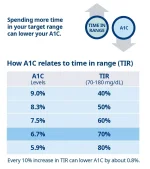
A1C went up

Status
Not open for further replies.

kroert99

GLP-1 Apprentice
Member Since
Oct 8, 2024
Posts
80
Likes Received
109
Location
Arizona
I just got my lab results from blood drawn on Friday and my fasting glucose was 66, but my A1C went up to 5.9 from 5.6. I'm always hungry, but I manage my food intake because I refuse to gain the weight back, but I'm wondering if the Tirzepatide I'm on from a gray supplier isn't doing much. Why would my fasting glucose be so low but the A1C is up? I'm on about 6-8 mg a week for maintenance.

I was off it for about 4-5 weeks because I had more plastic surgery. I had an extended arm lift, reverse tummy tuck, and lipo360 and was required to stop 2 weeks before surgery and a few weeks after.
 
That is weird, even with being off tirz for a month. I took a month off last October, but my A1C has only gone down.

I guess the stress of the surgery along with being off tirz? Or the surgery changes caused a false high:

Gemini said:
Did your lab report include a CBC (Complete Blood Count)? If you check your MCV (Mean Corpuscular Volume) or Hemoglobin levels, we can see if they are low, which would practically confirm that the A1C is a false high.

With your current fasting glucose, you current tirz seems overfilled, if anything.
 
Calm Logic said:
With your current fasting glucose, you current tirz seems overfilled, if anything.
Interesting. I lowered my dose today, which should only be 4mg. I did injection before I saw the email with my labs. I'll have to check to see if there were results from the supplier. I did not test my specific batch.
 
kroert99 said:
I just got my lab results from blood drawn on Friday and my fasting glucose was 66, but my A1C went up to 5.9 from 5.6. I'm always hungry, but I manage my food intake because I refuse to gain the weight back, but I'm wondering if the Tirzepatide I'm on from a gray supplier isn't doing much. Why would my fasting glucose be so low but the A1C is up? I'm on about 6-8 mg a week for maintenance.

I was off it for about 4-5 weeks because I had more plastic surgery. I had an extended arm lift, reverse tummy tuck, and lipo360 and was required to stop 2 weeks before surgery and a few weeks after.
Could be a ton of different things.

Fasting glucose is at best a reflection of your current metabolic state that particular day. 66 mg/dL is a rather impressive result in my book (I usually only get down into the 60s for any length of time if I engage in an extended fast); however, it also makes me wonder if you might be dosing a little higher than necessary on a GLP or otherwise.

A1c is a reflection of your average RBC glycation (and theoretically your average glucose levels) over the last few months, most heavily weighted by the more recent weeks and less strongly weighted by weeks further back in time.

The most logical conclusion is that your average blood sugar levels were low today (or recently), but higher in recent history. You'd mentioned surgery. You could very well have been on meds that acted to increase your blood sugar levels (e.g. steroids). This is similar to asking "I didn't eat anything yesterday, how come my body weight didn't drop from 150 to 125?" One result represents instantaneous behavior, the other represents a longer-term average.

If you're asking this as a serious question (VS an emotional statement of frustration), you could ask your doctor to prescribe you a CGM to view your blood sugar data over time. Your insurance most likely won't cover it (unless there's a reason for them to do so), but something like the Libre system can be had for $75/month if you jump through a hoop or two for a manufacturer's coupon code.
 
tubby said:
Could be a ton of different things.

Fasting glucose is at best a reflection of your current metabolic state that particular day. 66 mg/dL is a rather impressive result in my book (I usually only get down into the 60s for any length of time if I engage in an extended fast); however, it also makes me wonder if you might be dosing a little higher than necessary on a GLP or otherwise.

A1c is a reflection of your average RBC glycation (and theoretically your average glucose levels) over the last few months, most heavily weighted by the more recent weeks and less strongly weighted by weeks further back in time.

The most logical conclusion is that your average blood sugar levels were low today (or recently), but higher in recent history. You'd mentioned surgery. You could very well have been on meds that acted to increase your blood sugar levels (e.g. steroids). This is similar to asking "I didn't eat anything yesterday, how come my body weight didn't drop from 150 to 125?" One result represents instantaneous behavior, the other represents a longer-term average.

If you're asking this as a serious question (VS an emotional statement of frustration), you could ask your doctor to prescribe you a CGM to view your blood sugar data over time. Your insurance most likely won't cover it (unless there's a reason for them to do so), but something like the Libre system can be had for $75/month if you jump through a hoop or two for a manufacturer's coupon code.
Thank you. I will be following up with my doctor. She always requires an appointment. I'm 4 months postop today, actually. So if A1c is the last 3 months, I've been on the Glp1 for at least 3 months consistently. I was staying on it for A1C, and that went up, so now I don't know what to think. When I checked my fasting glucose with strips in the mornings when I wasn't on the glp1, it was in the 120s and even up to 130. I've never had it in the 60s. All previous labs, it was barely under 100. Even testing myself, it's usually around 95.

I'll ask my NP about the CGM. I know my dietitian had a program with it, and I could even reach out to her. I spent so much money on surgery with the loose skin, I am working hard to not regain any weight.
 
kroert99 said:
I'm on about 6-8 mg a week for maintenance.

I was off it for about 4-5 weeks because I had more plastic surgery. I had an extended arm lift, reverse tummy tuck, and lipo360 and was required to stop 2 weeks before surgery and a few weeks after
AI Overview

An A1C test measures average blood glucose levels over the past

2 to 3 months (approximately 90 to 120 days). It measures the percentage of hemoglobin coated with sugar (glycated hemoglobin), which reflects the lifespan of red blood cells. It is typically performed every 3 to 6 months for diabetes management.

Why 3 Months? Red blood cells live for about 3 months before they are replaced, making this timeframe the accurate reflection of average sugar levels.
 
kroert99 said:
Thank you. I will be following up with my doctor. She always requires an appointment. I'm 4 months postop today, actually. So if A1c is the last 3 months, I've been on the Glp1 for at least 3 months consistently. I was staying on it for A1C, and that went up, so now I don't know what to think. When I checked my fasting glucose with strips in the mornings when I wasn't on the glp1, it was in the 120s and even up to 130. I've never had it in the 60s. All previous labs, it was barely under 100. Even testing myself, it's usually around 95.

I'll ask my NP about the CGM. I know my dietitian had a program with it, and I could even reach out to her. I spent so much money on surgery with the loose skin, I am working hard to not regain any weight.
Perhaps you're expecting a blood draw (likely taken later in the day) to mirror a morning result taken shortly after waking? Dawn phenomena will bump up your "shortly after waking" result typically.

In my book, 5.6% and 5.9% are both perfectly acceptable results for someone with a history of much worse. Keep in mind that these machines aren't perfectly precise either. There's easily 0.1% to 0.2% of error in each reading, so it's also possible that your older A1c was really 5.7% or 5.8% and today's reading was exactly the same, but machine error is making it appear different. And if you're trying to chase "optimal health" rather than good enough, it would be far more productive to track fasted insulin levels over time as a benchmark rather than A1c, once you've got A1c back down into or near the normal range.
 
byefatlicia said:
2 to 3 months (approximately 90 to 120 days).
LOL, these chatbots crack me up sometimes in that they can't do a correct unit conversion, but people assume the rest of what they're saying to be correct.
 
tubby said:
LOL, these chatbots crack me up sometimes in that they can't do a correct unit conversion, but people assume the rest of what they're saying to be correct.
Is this not correct?

look, I'm not a doctor. I posted the AI quote to back up what I believe to be true 🙂
 
My A1C

tubby said:
Perhaps you're expecting a blood draw (likely taken later in the day) to mirror a morning result taken shortly after waking? Dawn phenomena will bump up your "shortly after waking result" typically.

My dawn phenomenon correlated very well with my A1C. So tirz was to the rescue for everything.

And yeah, 5.9 is no big deal.

When my A1C went up to 6.1 right before starting tirz, my doc said he sees pre-diabetes as pre-speeding. Not a big deal for him, at least since he was prescribing tirz anyway for obesity. But he seemed obsessive about lipids in comparison, which is weird. So everyone has their pet peeve with bloodwork, I guess.
 
byefatlicia said:
Is this not correct?

look, I'm not a doctor. I posted the AI quote to back up what I believe to be true 🙂
The rest of what the chatbot reported was correct. I was just amused that it screwed up the month to days unit conversion. You don't need to be a doctor to know that 2 to 3 months is approximately 60 to 90 days
 
Calm Logic said:
My A1C

My dawn phenomenon correlated very well with my A1C. So tirz was to the rescue for everything.
In case you're curious, I suspect the reason for that is that GLPs ever so slightly bump up how much insulin your pancreas is releasing throughout the day. Not enough to have you fainting left and right from low blood sugar, but if you're watching on a CGM you can definitely spot the difference as soon as it kick in when you first start taking them.

A big part of the reason for the dawn phenomena is that your body is setup to (although in some people this feature seems to be broken) initiate a strong first phase insulin response when you put glucose/starch in your mouth, but less of one when your liver releases stored glucose or produces new glucose through gluconeogenesis.

First thing in the morning, you typically haven't eaten in 8 to 16 hours and cortisol is telling your liver to fire things up for the day by releasing and/or making more glucose. Since nothing is going in your mouth just yet, your body undershoots the insulin dosing that would keep your blood sugar constrained. That in itself isn't a problem and there's no reason to try to do anything about it, it just is why you see the bump.

By taking a GLP, that small bump in insulin release will offset the morning bump to a greater degree and let your doctor pat themselves on the back harder than is likely deserved, but hey, let them take their win.
 
With a CGM, what number is un-ideal anyway, after eating carbs? In addition to length of spike.

attachments-screenshot_20260216_091515_adobe-acrobat-webp.16139.webp
 

Attachments

  • attachments-screenshot_20260216_091515_adobe-acrobat-webp.16139.webp
    attachments-screenshot_20260216_091515_adobe-acrobat-webp.16139.webp
    62 KB · Views: 1
Calm Logic said:
With a CGM, what number is un-ideal anyway, after eating carbs? In addition to length of spike.
That is a matter of great dispute and it's not clear to me that anybody knows the answer to that, although many end up obsessing over that in ways that are probably un-important and counter-productive. 🙂

The more important thing to look for is probably how quickly your body clears those spikes and how those spikes compared to those of other people. For example, if I eat a bowl of plain white rice as my first meal in the morning, I'd expect to see a gigantic spike, perhaps as high as 200 mg/dL, but I'd also expect that to return to baseline within 90 minutes to 2 hours VS stalling out at a higher level. Now if I lost 50 pounds, I suspect that spike would be shorter, but that isn't to say such a tall spike in itself is dangerous, as long as it's limited to a brief period of time. There are people who will dispute this and suggest that any spike above 140 mg/dL is non-ideal, but I struggle to support their rationale.

If, on the other hand, I spike to a high level and stay there for hours where the return to baseline is a much slower process, that would suggest significant insulin resistance/diabetes. Under those conditions, not just my RBC, but also my internal organs would be subject to higher degrees of glycation, as the spikes would reach them as well and remain more sustained. Everyone is going to agree that's a bad thing and I don't think any dispute exists there.

If, going further in that direction, my blood sugar is regularly staying closer to 200 mg/dL or higher and meals knock it in various directions at various times, that would be indicative of uncontrolled diabetes and be the worst possible scenario.

Then there will be some true processed food enthusiasts/addicts who will top even that, regularly maintaining double-digit A1cs, while helping their treatment teams afford to make payments on their luxury cars and private planes.

I split up the worse outcomes into more categories that necessary to help you contextualize that even if you're not in the very best category, it can always be worse.

 
tubby said:
In case you're curious, I suspect the reason for that is that GLPs ever so slightly bump up how much insulin your pancreas is releasing throughout the day. Not enough to have you fainting left and right from low blood sugar, but if you're watching on a CGM you can definitely spot the difference as soon as it kick in when you first start taking them.

A big part of the reason for the dawn phenomena is that your body is setup to (although in some people this feature seems to be broken) initiate a strong first phase insulin response when you put glucose/starch in your mouth, but less of one when your liver releases stored glucose or produces new glucose through gluconeogenesis.

First thing in the morning, you typically haven't eaten in 8 to 16 hours and cortisol is telling your liver to fire things up for the day by releasing and/or making more glucose. Since nothing is going in your mouth just yet, your body undershoots the insulin dosing that would keep your blood sugar constrained. That in itself isn't a problem and there's no reason to try to do anything about it, it just is why you see the bump.

By taking a GLP, that small bump in insulin release will offset the morning bump to a greater degree and let your doctor pat themselves on the back harder than is likely deserved, but hey, let them take their win.
Wow, thank you for the education!
 
tubby said:
Could be a ton of different things.

Fasting glucose is at best a reflection of your current metabolic state that particular day. 66 mg/dL is a rather impressive result in my book (I usually only get down into the 60s for any length of time if I engage in an extended fast); however, it also makes me wonder if you might be dosing a little higher than necessary on a GLP or otherwise.

A1c is a reflection of your average RBC glycation (and theoretically your average glucose levels) over the last few months, most heavily weighted by the more recent weeks and less strongly weighted by weeks further back in time.

The most logical conclusion is that your average blood sugar levels were low today (or recently), but higher in recent history. You'd mentioned surgery. You could very well have been on meds that acted to increase your blood sugar levels (e.g. steroids). This is similar to asking "I didn't eat anything yesterday, how come my body weight didn't drop from 150 to 125?" One result represents instantaneous behavior, the other represents a longer-term average.

If you're asking this as a serious question (VS an emotional statement of frustration), you could ask your doctor to prescribe you a CGM to view your blood sugar data over time. Your insurance most likely won't cover it (unless there's a reason for them to do so), but something like the Libre system can be had for $75/month if you jump through a hoop or two for a manufacturer's coupon code.
Learned more about Diabetes Type 2 by using a CGM(continuos glucose monitor) than all other information combined. Highly recommend to all for at least a trial period.
 
Interesting discussion. I have labs tomorrow morning for the first time since going grey. Will see my PCP next week.

I am expecting my A1c to be consistent with where it was 6 mos ago.

All things being equal, I pay less attention to blood glucose than to A1C.
 
Status
Not open for further replies.

Trending content

Members online

No members online now.

Forum statistics

Threads
2,651
Messages
56,150
Members
1
Latest member
Admin
Back
Top