Purity issues with SS-31

Status
Not open for further replies.

jjrama

Recently Joined 🚫No Source Discussion🚫
Member Since
Mar 24, 2026
Posts
11
Likes Received
28
Location
Los Angeles
Hi All,

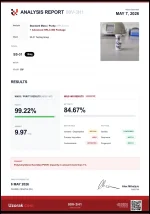
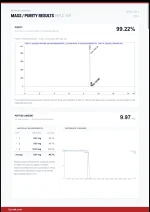
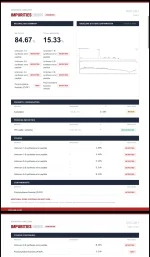
I am part of a test group where the HPLC-UV should 99% but the MS which seems to be more accurate shows 84.67% purity. The MS testing also found number of pvdf particulates.

It seems pvdf can be harmful.

The testing below is for white caps SS-31 10 mg

That are everyone’s thoughts ?

attachments-img_2570-webp.22261.webp


attachments-img_2571-webp.22262.webp


attachments-img_2572-webp.22263.webp
 

Attachments

  • attachments-img_2570-webp.22261.webp
    attachments-img_2570-webp.22261.webp
    68.9 KB · Views: 1
  • attachments-img_2571-webp.22262.webp
    attachments-img_2571-webp.22262.webp
    57.5 KB · Views: 1
  • attachments-img_2572-webp.22263.webp
    attachments-img_2572-webp.22263.webp
    91.8 KB · Views: 1
jjrama said:
Hi All,

I am part of a test group where the HPLC-UV should 99% but the MS which seems to be more accurate shows 84.67% purity. The MS testing also found number of pvdf particulates.

It seems pvdf can be harmful.

The testing below is for white caps SS-31 10 mg

That are everyone’s thoughts ? View attachment 22261 View attachment 22262 View attachment 22263
Can't you just filter out the pvdf impurities?
 
From my understanding, which is basically worth nothing, no you can't.
 
repeated4275 said:
From my understanding, which is basically worth nothing, no you can't.
Lou-oogle says you can filter out particulates - personally I'd slap a .22 micron filter on that kit, plug and play... I figure I'm already overly cautious compared to others so like a little jolt of risk now and again.

PVDF (polyvinylidene fluoride) impurities in peptides typically refer to microscopic residues or fragments of PVDF membranes (often branded as Durapore) that shed into the sample during peptide purification, blotting, or filtration. While PVDF is commonly used for its low-protein-binding properties, it can contaminate sensitive applications like mass spectrometry (MS) or cell-based assays. [1, 2, 3, 4, 5]

Can you filter PVDF impurities with a 0.22 \(\mu \)m filter? [1]

Yes, a 0.22 \(\mu \)m (0.22 micron) filter is the standard method for removing particulate PVDF contamination. [1]

Mechanism: A 0.22 \(\mu \)m syringe filter is ideal for removing particles, aggregates, and bacteria, allowing the dissolved peptide to pass through while trapping solid debris.

Recommended Filter Material: For peptides, a 0.22 \(\mu \)m PES (Polyethersulfone) filter is generally preferred over PVDF filters to avoid introducing more PVDF material.

Limitation: While it removes solid particles, it will not remove soluble chemical contaminants. [1, 2, 3, 4, 5]

Key Considerations

PES is Often Better: Polyethersulfone (PES) filters are widely considered the "gold standard" for peptide filtration due to their low-binding properties and high flow rates.

Avoid Clogging: If the solution is highly contaminated, the filter may clog, requiring a larger pore size (e.g., 0.45 \(\mu \)m) as a pre-filter.

What it does NOT do: A 0.22 \(\mu \)m filter does not remove endotoxins (pyrogens) or soluble chemical impurities.

Alternative Cleanup: If particulates are dense, centrifugation at 10,000 RPM for 10 minutes is an effective alternative to remove solid particles. [1, 2, 3, 4, 5]

For final sterilization or removal of fine particles, use a 0.22 \(\mu \)m low-protein binding filter (such as PES or PVDF) to ensure a clean, sterile, and high-quality peptide solution. [1, 2, 3, 4, 5]
 
E R P, J E E P, U T H E R, are all under scrutiny with the latter 2 actually being disqualified from STG due to their lack of responsibility and transparency.

Knowing many of the products we get from CN fail sterility and recently, endos, I filter them out twice; first regarding sterility and the second (acrodisc) regarding endos.
 
dancs said:
E R P, J E E P, U T H E R, are all under scrutiny with the latter 2 actually being disqualified from STG due to their lack of responsibility and transparency.

Knowing many of the products we get from CN fail sterility and recently, endos, I filter them out twice; first regarding sterility and the second (acrodisc) regarding endos.
What are these auto disc filters? I just did a quick Google and they are expensive. Unless I'm looking at the wrong ones.
 
theflyinggiraffe said:
What are these auto disc filters? I just did a quick Google and they are expensive. Unless I'm looking at the wrong ones.
Membrane E Mustang Acrodisk Filters made by Cytovia; 10 for like $300. You can get generic ones from other sites; 50 pack for $250.

But don't take my advice regarding this because I found out that these filters can take out endotoxins AND the actual compound itself. 😔

You can still get the regular filters that help sterilize the product, but don't get the ones I mentioned before.
 
dancs said:
Membrane E Mustang Acrodisk Filters made by Cytovia; 10 for like $300. You can get generic ones from other sites; 50 pack for $250.

But don't take my advice regarding this because I found out that these filters can take out endotoxins AND the actual compound itself. 😔

You can still get the regular filters that help sterilize the product, but don't get the ones I mentioned before.
Oh yes, I already filter but I just saw your info about the Endo ones and got curious 😂 thanks!
 
Don't most labs filter before testing? If filter removed the thing that sucks, wouldn't it have already been removed?
 
Status
Not open for further replies.

Trending content

Members online

No members online now.

Forum statistics

Threads
2,620
Messages
55,146
Members
1
Latest member
Admin
Back
Top