Eloralintide and Tirzepatide Rat Study

Status
Not open for further replies.

Grogu

GLP-1 Enthusiast
Chief Expert
Member Since
Dec 2, 2025
Posts
717
Likes Received
7,154
Location
Coruscant
Saw this over on TG. At the American Diabetes Association conference this week EL presented data from a rat study on elora administered with tirz.

I think big take away is that the effects of combining the two medications was truly additive. Not too surprising, since that is similar to cagrisema. An interesting thing in the study design is the adjunctive administration of elora. Rats were given two weeks of tirzepatide, followed by adjunctive use of eloralintide at various doses. This mimics what EL must think that will happen in clincial settings (i.e. patient plateaus on tirzepatide and then eloralintide is added). The good news is that addititive weightloss is noted in this arm of the study.

https://lillyscience.lilly.com/download/74HOkcr7sr7GhAXe4l7wFf
 
I asked AI what would happen if eloralintide was added to retatrutide-

No direct clinical or preclinical data exists yet for combining eloralintide (LY3841136, Lilly’s selective amylin receptor agonist) with retatrutide (LY3437943, Lilly’s GIP/GLP-1/glucagon triple agonist). However, we can make a reasoned prediction based on mechanisms, existing data with similar combinations, and Lilly’s development strategy.

lilly.gcs-web.com

Expected Effects (Hypothetical/Extrapolated)Additive or greater weight loss: Retatrutide already delivers strong results (up to ~24% in Phase 2 and ~28% average in Phase 3 at high doses over ~80 weeks). Eloralintide monotherapy achieved up to ~20% weight loss at 48 weeks. Adding an amylin agonist (which enhances satiety and slows gastric emptying via a distinct pathway) to a potent triple incretin/glucagon agonist should produce complementary effects, similar to how eloralintide added to tirzepatide (dual GIP/GLP-1) showed additive benefits in rat studies. This could push total weight loss higher (potentially 25–30%+ or more in some patients), help overcome plateaus, or improve body composition (more fat loss, relatively less lean mass loss).

delta.larvol.com

Enhanced satiety and appetite control: Amylin agonism targets additional hunger/satiety circuits, which could further suppress food intake beyond what retatrutide achieves through GLP-1/GIP/glucagon pathways.

Metabolic benefits: Potential improvements in glycemic control, energy expenditure (from glucagon in retatrutide), and overall cardiometabolic markers. Amylin agonists may also support better "quality" of weight loss.

Tolerability: Eloralintide was designed for better GI tolerability than earlier non-selective amylin analogs (e.g., less nausea via selectivity for the amylin 1 receptor). However, adding it could still increase GI side effects (nausea, vomiting, constipation) in an additive way, especially during dose escalation. Lilly’s preclinical data with tirzepatide suggests manageable profiles with proper titration.

dom-pubs.onlinelibrary.wiley.com

Lilly’s Approach and Related ResearchLilly explicitly positions eloralintide as a complementary therapy to incretin-based drugs (like tirzepatide or potentially retatrutide). They have:Completed Phase 1 safety/PK studies of eloralintide + tirzepatide.

Ongoing Phase 2 combination studies with tirzepatide.

Phase 3 trials like ENLIGHTEN-6, which evaluates eloralintide added to stable weekly incretin therapy in people with persistent obesity/overweight (this likely includes or is compatible with drugs like retatrutide once approved/available).

trials.lilly.com

Caveats This is investigational — neither drug is approved for combination use, and real-world human results could differ (e.g., due to overlapping side effects, receptor interactions, or individual variability).

Risks could include amplified GI issues, effects on muscle preservation, or other unknowns.

Dosing, titration, and long-term safety would need careful study.

In summary, adding eloralintide to retatrutide would likely result in enhanced, additive weight loss and satiety through complementary mechanisms, with Lilly’s broader program supporting this as a future strategy for patients needing more efficacy or plateau management. Full data would come from future trials.
 
Interesting early data. Basically, tirzepatide + eloralintide caused more weight loss together than either alone in obese rats. Looks like longer appetite suppression was a big factor.

Big catch: this is rat data, not humans yet. But it does seem to show where obesity meds are continuing to head; stacking multiple pathways instead of relying on one drug alone.
 
Danger1212 said:
Interesting early data. Basically, tirzepatide + eloralintide caused more weight loss together than either alone in obese rats. Looks like longer appetite suppression was a big factor.

Big catch: this is rat data, not humans yet. But it does seem to show where obesity meds are continuing to head; stacking multiple pathways instead of relying on one drug alone.

Totally agree that this is only a rat study, but since cagrilintide is additive in humans, chances are that eloralintide will similarly apply to humans. Or at least that's my wishful thinking 🤣.

Can you imagine? 28% on tirzepatide + 20% on eloralintide combined. We're talking a potential huge dent in the obesity epidemic as we know it.
 
Grogu said:
Totally agree that this is only a rat study, but since cagrilintide is additive in humans, chances are that eloralintide will similarly apply to humans. Or at least that's my wishful thinking 🤣.

Can you imagine? 28% on tirzepatide + 20% on eloralintide combined. We're talking a potential huge dent in the obesity epidemic as we know it.
Yeah, if the human data ends up even remotely close to that, it could be massive. Tirz already changed the landscape. Adding a strong amylin analog on top could push weight loss into territory we’ve never really seen from meds before.

The big question becomes tolerability. Losing 40–50% body weight sounds amazing until people can’t eat, feel sick constantly, or lose too much lean mass. But if they can balance efficacy with side effects, it’s definitely a glimpse at where anti-obesity treatment is heading.

Let’s keep praying for our rat @chewonmysac 😁
 
Danger1212 said:
Interesting early data. Basically, tirzepatide + eloralintide caused more weight loss together than either alone in obese rats. Looks like longer appetite suppression was a big factor.

Big catch: this is rat data, not humans yet. But it does seem to show where obesity meds are continuing to head; stacking multiple pathways instead of relying on one drug alone.
Speak for yourself. I've already identified as a rat since starting tirzepatide. 🐀

Now I'm just waiting for eloralintide to complete my evolution.
 
Danger1212 said:
Yeah, if the human data ends up even remotely close to that, it could be massive. Tirz already changed the landscape. Adding a strong amylin analog on top could push weight loss into territory we’ve never really seen from meds before.

And results not even seen with gastric surgery. This combo could be the death kneel for surgical interventions in most cases.

Danger1212 said:
The big question becomes tolerability. Losing 40–50% body weight sounds amazing until people can’t eat, feel sick constantly, or lose too much lean mass. But if they can balance efficacy with side effects, it’s definitely a glimpse at where anti-obesity treatment is heading.

Let’s keep praying for our rat @chewonmysac 😁

YES, prayers and thoughts with @chewonmysac . He’s paving the way for the rest of us.
 
Grogu said:
Saw this over on TG. At the American Diabetes Association conference this week EL presented data from a rat study on elora administered with tirz.

I think big take away is that the effects of combining the two medications was truly additive. Not too surprising, since that is similar to cagrisema. An interesting thing in the study design is the adjunctive administration of elora. Rats were given two weeks of tirzepatide, followed by adjunctive use of eloralintide at various doses. This mimics what EL must think that will happen in clincial settings (i.e. patient plateaus on tirzepatide and then eloralintide is added). The good news is that addititive weightloss is noted in this arm of the study.

https://lillyscience.lilly.com/download/74HOkcr7sr7GhAXe4l7wFf
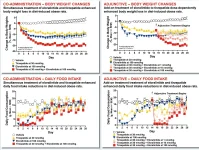
Thanks for that link. I am very interested in Elora and Reta, but these rat studies certainly drove home the point of the combined effect. I took a screen shot of the charts showing the additive effect of Elora and Tirz in rats.

attachments-1780867542150-webp.26671.webp
 

Attachments

  • attachments-1780867542150-webp.26671.webp
    attachments-1780867542150-webp.26671.webp
    231.2 KB · Views: 3
m100568 said:
Thanks for that link. I am very interested in Elora and Reta, but these rat studies certainly drove home the point of the combined effect. I took a screen shot of the charts showing the additive effect of Elora and Tirz in rats.

View attachment 26671

Yeah, I'm super interested in elora too! Just the entire idea that there are "other" pathways to crack the same problem and that it looks like this medication can be stacked on top of what we already have is fantastic.

Thanks for posting the screenshot! The top right hand quadrant is the one that is really exciting to me and specifically the red line.
 
m100568 said:
Thanks for that link. I am very interested in Elora and Reta, but these rat studies certainly drove home the point of the combined effect. I took a screen shot of the charts showing the additive effect of Elora and Tirz in rats.

View attachment 26671
There are some interesting trends hiding in the graphs if one takes the time to spot them:

The "co-administration" food intake graph suggests that elora (as administered) seems to have a more stable/predictable effect on appetite than tirz (or tirz + elora). With tirz you see one heavy day of eating followed by two lighter days of eating. Meanwhile elora has much less day to day variability in eating.

The 3 day cadence for tirz is to be expected, since the drug was dosed every 3rd day in this trial and elora being more stable makes sense since due to a longer half-life, there would be less day to day variability in serum concentration of elora VS tirz.

With tirz alone, you had two days of appetite suppression followed by a 3rd day in which the rats would "pig out" and eat more than the control rats on those days. Meanwhile, once saturated, the elora rats appear to have even more stable day to day appetite levels than the control rats.

Meanwhile, the elora rats in the same "co-administration" food graph returned to eating nearly the same amount of food as the control rats at about 3 weeks into the trial, which is certainly an interesting result. Normally (for diet induced weight loss), a reduced average daily intake level would be maintained (to the extent that a given weight loss result is maintained). I mean the average is technically lower, but not that much lower as one closes in on the end of the trial.

This tells me that the "calories" tracking/obsessed folks will likely do better psychologically on elora than on a GLP unless they're taking more frequent GLP doses to smooth out day to day variability or they're employing other means (e.g. diet composition changes to help manage appetite). The trial can't inform on the latter since the rats presumably are being fed some standardized chow of uniform composition.

Moving onto the "adjunctive" graph. It's interesting just how much appetite is crushed (and for two full shot cycles) on the tirz + max elora graph. Even though at this point tirz had already plateaued before the elora was added, it crushes appetite nearly as much as it did for the first two cycles on the co-administration graph (where both tirz and elora were started at the same time). It's not looking like longer-term this impacts the overall weight loss plateau, but it's wild that overall food consumption seems to track so similarly with the red squares on both graphs (despite one representing a rat new to GLPs and one represents an "experienced" GLP rat).
 
Actually wasn't it around 350 bucks a kit from Uther or something like that? Yeah that's a lot especially since it wasn't even a very large kit hopefully we're going to hear a lot more about this going forward.
 
Scorpio73 said:
Unless I do not know what kit means - but $25/vial - is that a lot?

Scorpio73 said:
l oh I got you, so I was pretty sure wrong about that it was actually 350 a kit, which would make it 35 a vial. But I think that the milligram for the each vial was like 5 mg or something ridiculously small I honestly can't remember but I think 5 mg for 35 a vial is a lot. Imagine paying 35 a vial for 5 mg of tirz.
 
Grogu said:
And results not even seen with gastric surgery. This combo could be the death kneel for surgical interventions in most cases.

YES, prayers and thoughts with @chewonmysac . He’s paving the way for the rest of us.
Reta is almost at gastric surgery level by itself. When they roll out a quad agonist I would be surprised if they aren't out performing it. Obviously sides are big but compared to literally having your stomach permanently surgically altered they are much better. I think once we see the triple and quad agonists really take off the next class of drugs will be maintenance drugs.
 
Scorpio73 said:
Unless I do not know what kit means - but $25/vial - is that a lot? lol

Exactly what @Gr33dyOctopus said. The cost is actually $350 directly from Uther, but that's not the issue, the "issue" is that eloralintide (at least on it's own) has higher dosing than say cagrilintide. In the eloralintide clinical trials, the 6mg and 9mg arms out performed lower doses. So, a 10mg vial might only last a week or two depending on the dose. The current Uther batch tested at slighted above 13mg, so at 6mg, that's only 2 weeks per vial.
 
TooGood76 said:
I think once we see the triple and quad agonists really take off the next class of drugs will be maintenance drugs.

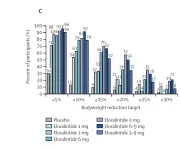
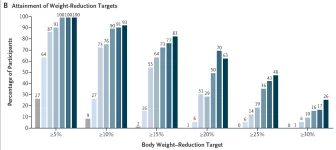
I'm not sure about that. I think that there is a bigger problem that needs to be addressed first and I think eloralintide is exactly what EL is thinking. And it's the elephant in the room.... that being that folks who have higher body weight reductions targets are less likely to be successful. We see this across this entire class of medications. They need to fix that first. First picture below is elora and second is reta.

Maintenance is easy. Just keep taking the medication.

attachments-1780877887810-webp.26682.webp


attachments-1780878086264-webp.26683.webp
 

Attachments

  • attachments-1780877887810-webp.26682.webp
    attachments-1780877887810-webp.26682.webp
    44.6 KB · Views: 4
  • attachments-1780878086264-webp.26683.webp
    attachments-1780878086264-webp.26683.webp
    28.9 KB · Views: 4
Gr33dyOctopus said:
Actually wasn't it around 350 bucks a kit from Uther or something like that? Yeah that's a lot especially since it wasn't even a very large kit hopefully we're going to hear a lot more about this going forward.
WW just opened their buy for $315/kit but it comes with a $33 testing fee adder and a $10 admin fee. There’s another group that will supposedly release their pricing tomorrow and says they’ll beat everyone else on pricing.

I don’t have any interest in the product myself. I just find the discussion and the market interesting.

Like Grogu and others have pointed out, it has the potential to require quite a bit of product. I think the hope amongst those who are interested is that is effective as a smaller supplement to an existing GLP protocol.
 
Status
Not open for further replies.

Members online

No members online now.

Forum statistics

Threads
4,434
Messages
86,405
Members
7,877
Latest member
jhonpdr
Back
Top