Are you Jewish? Does Tirz work well for you?

Status
Not open for further replies.

PatchyFog

GLP-1 Novice 🚫No Source Discussion🚫
Chief Expert
Member Since
Feb 17, 2025
Posts
18
Likes Received
91
Location
California
I'm treading carefully here, because I don't want to get into some kind of useless 1930s religious/eugenics thing, but I've heard now from 2 older, Jewish, female friends that, while they get some effect from Tirz and have lost a bit of weight after many, many moths, it hasn't been the easy road others have experienced. Both are at 15 mg.

Personally, I'm a Finnish/English old white man and it seems like the other old-fart Northern European folks in my circle have had big losses at lower doses.

Certainly, a couple of anecdotes is not a trend, but I'm wondering if any of you Jewish folks on here have had great results or if being a part of "the tribe" is maybe a detriment to GLP effectiveness?

Beyond that, I wonder if there are other useless generalizations we can make about other sub-populations? And is Lilly or someone even collecting demographic data along these lines?

I'm really not trolling. This is a good-faith inquiry. Please be nice.
 
There is real research examining whether GLP-1–based medications (such as semaglutide and tirzepatide) work differently across regions, ancestry groups, and genetic backgrounds. The current clinical evidence suggests that while genetic variant frequencies differ worldwide, the actual treatment response is broadly consistent across populations.

A post-hoc analysis of the STEP trials found that semaglutide 2.4 mg produced clinically meaningful weight loss across all racial and ethnic subgroups, with no statistically significant differences in treatment effect by race or ethnicity. This supports the idea that these medications are effective across diverse populations.

Similarly, analyses of tirzepatide trials—including datasets focused on Japanese participants—demonstrate strong weight-loss outcomes, reinforcing that effectiveness is not limited to one geographic or genetic group.

Although certain genetic variants in GLP-1 pathway genes occur at different frequencies across populations, large multi-ancestry studies indicate that these differences have limited impact on overall weight-loss effectiveness. In other words, ancestry alone is not currently a reliable predictor of who will respond better or worse.

One important caveat is that many obesity trials have historically under-represented some global populations, which means highly granular regional comparisons are still developing.

Bottom line:

Choosing between GLP-1 medications should not be based on ancestry or regional genetics alone. Factors such as dose escalation, adherence, tolerability, baseline metabolic health, and access to care are far stronger predictors of real-world outcomes.

Sources / Data Points

Efficacy and safety of semaglutide 2.4 mg by race and ethnicity: A post hoc analysis of three randomized controlled trials - PubMed

The treatment effect of semaglutide was statistically significant versus placebo and clinically relevant across all racial and ethnic subgroups in STEP 1 and 3 and STEP 2. All subgroups across both samples demonstrated good tolerability.

pubmed.ncbi.nlm.nih.gov

Association of baseline characteristics with clinical outcomes of tirzepatide treatment in Japanese patients with obesity disease: A subgroup analysis of the SURMOUNT‐J trial - PMC

This analysis aimed to assess the influence of selected baseline factors on tirzepatide treatment response in Japanese patients with obesity disease. This was a prespecified subgroup analysis of the SURMOUNT‐J trial. Japanese adults with obesity ...

pmc.ncbi.nlm.nih.gov

ClinPGx

www.clinpgx.org

Association between plausible genetic factors and weight loss from GLP1-RA and bariatric surgery - Nature Medicine

The authors found, after analyzing 10,960 individuals from 9 multiancestry biobanks across 6 countries, that genetic factors previously associated with BMI have limited impact on GLP-1 receptor agonist-induced weight loss.

www.nature.com

https://gh.bmj.com/content/9/11/e017177

https://icer.org/wp-content/uploads/2025/09/ICER_Obesity_Draft-Report_For-Publication_090925.pdf
 
BellyD said:
There is real research examining whether GLP-1–based medications (such as semaglutide and tirzepatide) work differently across regions, ancestry groups, and genetic backgrounds. The current clinical evidence suggests that while genetic variant frequencies differ worldwide, the actual treatment response is broadly consistent across populations.

A post-hoc analysis of the STEP trials found that semaglutide 2.4 mg produced clinically meaningful weight loss across all racial and ethnic subgroups, with no statistically significant differences in treatment effect by race or ethnicity. This supports the idea that these medications are effective across diverse populations.

Similarly, analyses of tirzepatide trials—including datasets focused on Japanese participants—demonstrate strong weight-loss outcomes, reinforcing that effectiveness is not limited to one geographic or genetic group.

Although certain genetic variants in GLP-1 pathway genes occur at different frequencies across populations, large multi-ancestry studies indicate that these differences have limited impact on overall weight-loss effectiveness. In other words, ancestry alone is not currently a reliable predictor of who will respond better or worse.

One important caveat is that many obesity trials have historically under-represented some global populations, which means highly granular regional comparisons are still developing.

Bottom line:

Choosing between GLP-1 medications should not be based on ancestry or regional genetics alone. Factors such as dose escalation, adherence, tolerability, baseline metabolic health, and access to care are far stronger predictors of real-world outcomes.

Sources / Data Points

Efficacy and safety of semaglutide 2.4 mg by race and ethnicity: A post hoc analysis of three randomized controlled trials - PubMed

The treatment effect of semaglutide was statistically significant versus placebo and clinically relevant across all racial and ethnic subgroups in STEP 1 and 3 and STEP 2. All subgroups across both samples demonstrated good tolerability.

pubmed.ncbi.nlm.nih.gov

Association of baseline characteristics with clinical outcomes of tirzepatide treatment in Japanese patients with obesity disease: A subgroup analysis of the SURMOUNT‐J trial - PMC

This analysis aimed to assess the influence of selected baseline factors on tirzepatide treatment response in Japanese patients with obesity disease. This was a prespecified subgroup analysis of the SURMOUNT‐J trial. Japanese adults with obesity ...

pmc.ncbi.nlm.nih.gov

ClinPGx

www.clinpgx.org

Association between plausible genetic factors and weight loss from GLP1-RA and bariatric surgery - Nature Medicine

The authors found, after analyzing 10,960 individuals from 9 multiancestry biobanks across 6 countries, that genetic factors previously associated with BMI have limited impact on GLP-1 receptor agonist-induced weight loss.

www.nature.com

https://gh.bmj.com/content/9/11/e017177

https://icer.org/wp-content/uploads/2025/09/ICER_Obesity_Draft-Report_For-Publication_090925.pdf

The best thing about the title of the OP is that it will draw ppl to this very thoughtful, thorough response to a question others might have shared (in one form or another) but were too afraid to ask
 
PatchyFog said:
I'm treading carefully here, because I don't want to get into some kind of useless 1930s religious/eugenics thing, but I've heard now from 2 older, Jewish, female friends that, while they get some effect from Tirz and have lost a bit of weight after many, many moths, it hasn't been the easy road others have experienced. Both are at 15 mg.

Personally, I'm a Finnish/English old white man and it seems like the other old-fart Northern European folks in my circle have had big losses at lower doses.

Certainly, a couple of anecdotes is not a trend, but I'm wondering if any of you Jewish folks on here have had great results or if being a part of "the tribe" is maybe a detriment to GLP effectiveness?

Beyond that, I wonder if there are other useless generalizations we can make about other sub-populations? And is Lilly or someone even collecting demographic data along these lines?

I'm really not trolling. This is a good-faith inquiry. Please be nice.
I've re-read and I'm still confused as hell, what does being jewish have to do with it? If i eat yogurt will a gpl1 work on me or is it only for non-yogurt eaters? wth
 
BellyD said:
There is real research examining whether GLP-1–based medications (such as semaglutide and tirzepatide) work differently across regions, ancestry groups, and genetic backgrounds.
Thank you so much for this. This is exactly the kind of response I was hoping to elicit. And, actually, the general thrust is what I was hoping to hear.

Now to read these references...
 
Retazempic said:
The best thing about the title of the OP is that it will draw ppl to this very thoughtful, thorough response to a question others might have shared (in one form or another) but were too afraid to ask
Judging by the structure and the emdash right smack in the middle of it, that is the thorough cut and paste of AI.
 
jw717us said:
Judging by the structure and the emdash right smack in the middle of it, that is the thorough cut and paste of AI.
I coped and pasted your response in to AI to make it sound better lol...

(Upon close examination, the sentence's architectural rigidity—coupled with the conspicuous em dash positioned precisely at its midpoint—betrays the unmistakable hallmarks of an AI-generated artifact, most likely the product of a mechanical cut-and-paste operation rather than organic composition.)
 
PatchyFog said:
I'm treading carefully here, because I don't want to get into some kind of useless 1930s religious/eugenics thing, but I've heard now from 2 older, Jewish, female friends that, while they get some effect from Tirz and have lost a bit of weight after many, many moths, it hasn't been the easy road others have experienced. Both are at 15 mg.

It's fair question to ask if the effectiveness of tirzepatide varies across race and ethnic backgrounds, as this is clearly an empirical question. Not sure if it had to be inspired by two older Jewish ladies.

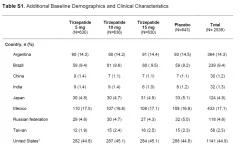
As noted by @BellyD, the current evidence suggests that glp-1 medications are effective across diverse populations. The SURMOUNT clincial studies actually recruited participants from around the world. Clearly, if there was an issue with race and effectiveness, we'd know.

So, the answer to the underlying question is, no. These older Jewish ladies didn't experience slower results because they are Jewish, and the fact that you're an old white guy doesn't mean that you'll necessarily be more successful than them.

SURMOUNT demographics:

attachments-1770553363674-webp.15694.webp
 

Attachments

  • attachments-1770553363674-webp.15694.webp
    attachments-1770553363674-webp.15694.webp
    63 KB · Views: 1
lemon lady said:
I've re-read and I'm still confused as hell, what does being jewish have to do with it? If i eat yogurt will a gpl1 work on me or is it only for non-yogurt eaters? wth
For the same reason redheads need more nerve blocking and anesthesia in surgery. Genetics affects how we metabolize drugs.
 
I was raised by militant atheists and tirz works for me. I think my cousin's Christian, though not particularly devout, and she's had better luck with tirz than sema.
 
Goonwise said:
I am a Pastafarian. Tirz does not work well for me. Reta works better on me than my wiccan friends.
Did you say Pastafarian or Retafarian? 😂🫣😂
 
Status
Not open for further replies.

Members online

No members online now.

Forum statistics

Threads
4,434
Messages
86,405
Members
7,877
Latest member
jhonpdr
Back
Top